
 Русский
 Português
 Español
 Français
 Deutsch
 العربية
 简体中文
简体中文 日本語
日本語 한국어
한국어
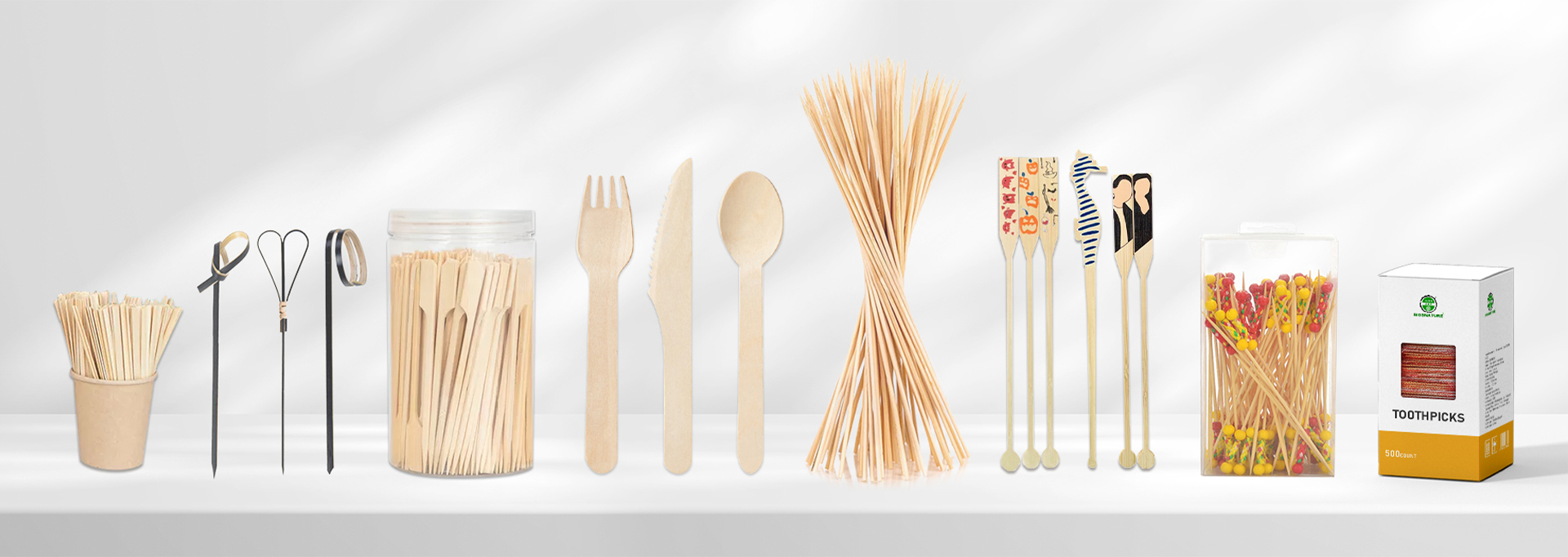
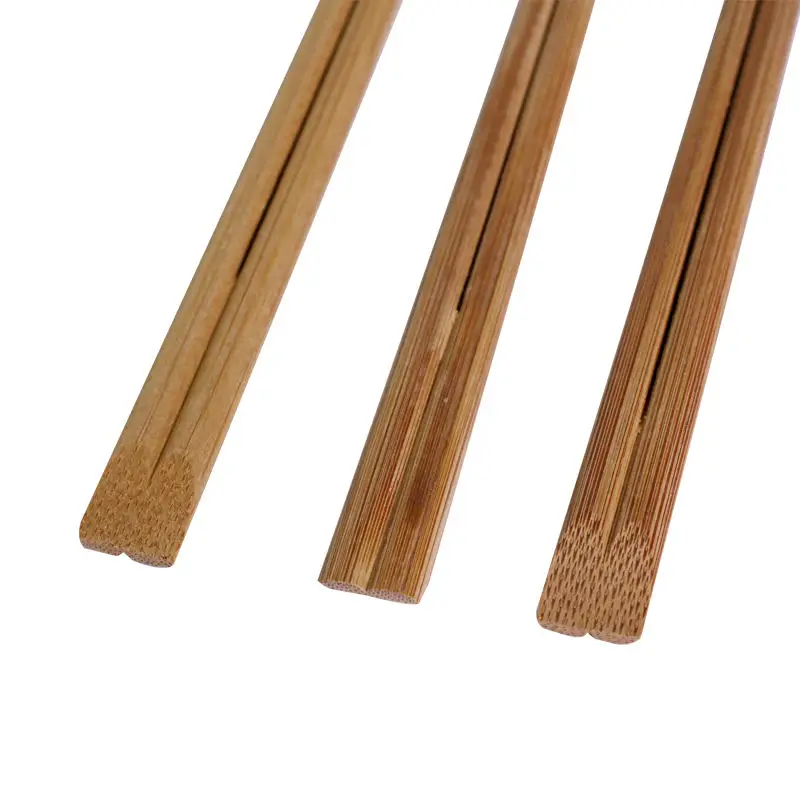
In the world of high-end Japanese cuisine, every detail hides respect for diners, and disposable Tenzen chopsticks are no exception. Today, more and more sushi restaurants focusing on high-end Omakase use Tenzen chopsticks exclusively in their takeout packages, instead of ordinary round chopsticks. Many people wonder why Tenzen chopsticks can become the “standard configuration” for high-end Omakase among all disposable chopsticks. Behind this is the inheritance of Japanese culinary culture, the pursuit of ultimate dining experience, and the in-depth integration of high-end Japanese cuisine disposable chopsticks with ingredients and brand style—it is by no means a mere “face project.”
To be honest, the uniqueness of Tenzen chopsticks can be felt at first glance, but their in-depth value needs to be savored carefully. They are not simply “sharpened chopsticks,” but a crafted work that combines craftsmanship, materials and culture—the specially cut slanted surface at the top is not random. In Japanese culinary culture, this slant symbolizes “dedication” and “purity,” representing the chef presenting the highest quality ingredients and the most sincere intentions to diners without reservation. This sense of ritual hidden in the details is something ordinary round chopsticks can never replace.
The choice of materials is the core dividing line between Tenzen chopsticks and ordinary disposable chopsticks. Tenzen chopsticks used in high-end Omakase are mostly made of high-quality carbonized bamboo or Yoshino cedar. These two materials have their own advantages, but they are both perfectly suitable for the taste needs of sushi, and are also the preferred materials for sushi-specific disposable chopsticks.
Let’s take a clear look at the characteristics of the common materials used in Tenzen chopsticks and why they are more suitable for high-end Japanese cuisine through a table:
| Material Type | Core Features | Adaptation Advantages | Environmental Friendliness |
|---|---|---|---|
| High-Quality Carbonized Bamboo | Fine texture, no peculiar smell, moisture-proof and bacteria-proof after high-temperature carbonization | Tough texture, not easy to break when picking up sushi, and does not cover the original taste of ingredients | Degradable natural bamboo, belonging to environmentally friendly disposable chopsticks |
| Yoshino Cedar | With a light natural wood fragrance, light texture and warm hand feel | The wood fragrance blends with the original taste of sushi, enhancing the dining experience, suitable for high-end scenarios | Sustainably grown wood, meeting environmental standards |
| Ordinary Bamboo (Ordinary Disposable Chopsticks) | Rough texture, easy to have bamboo odor, no special treatment | Brittle texture, easy to break when picking up delicate sushi, affecting taste | Some are not environmentally treated, with slow degradation speed |
In addition to materials, the craftsmanship details of Tenzen chopsticks further reflect their advantages in adapting to high-end Omakase. Real Tenzen chopsticks are mostly made by hand finishing, not mass machine cutting. The slanted surface of each pair of chopsticks is flat and smooth, without burrs, fitting the finger pads when held in the hand, and the comfort is far superior to ordinary disposable chopsticks. More importantly, the center of gravity design of Tenzen chopsticks is very exquisite—the center of gravity is rear-placed, allowing precise force when pinching with fingers. When picking up delicate and fragile sushi such as otoro, uni, and tuna akami, it can hold steadily without damaging the shape of the sushi, nor crushing the ingredients due to excessive force.
Some people may ask, it’s just takeout, why bother so much with disposable chopsticks? In fact, the core of high-end Omakase is never “filling the stomach,” but allowing diners to feel a complete aesthetic experience in any scenario. Imagine opening an exquisite Omakase takeout box with carefully made sushi by the chef, paired with a pair of ordinary round chopsticks that are rough and easy to slip. That instant sense of inconsistency will directly lower the style of the whole meal. Tenzen chopsticks, from the moment you unpack them, can create a sense of ritual like dining in the restaurant, allowing takeout to have an “immersive” high-end experience.
Here are some core craftsmanship points of Tenzen chopsticks, which can also help you better distinguish between high-quality disposable Tenzen chopsticks and inferior products:
- Slanted Surface: The slanted surface of high-quality Tenzen chopsticks has a precise angle (about 45°), with a smooth edge without burrs and no obvious cutting marks. While symbolizing “dedication,” it is more convenient for picking up ingredients;
- Grip: The chopsticks are moderately thick and thin, polished, so they do not feel uncomfortable or slip when held in the hand, with the center of gravity rear-placed for easier force application;
- No Odor: High-quality materials combined with high-temperature disinfection technology, no bamboo odor, wood odor or chemical odor after unpacking, which does not affect the taste of ingredients;
- Environmental Friendliness: Meet food-grade safety standards, use degradable materials, and can decompose naturally after use, in line with the environmental concept of high-end catering.
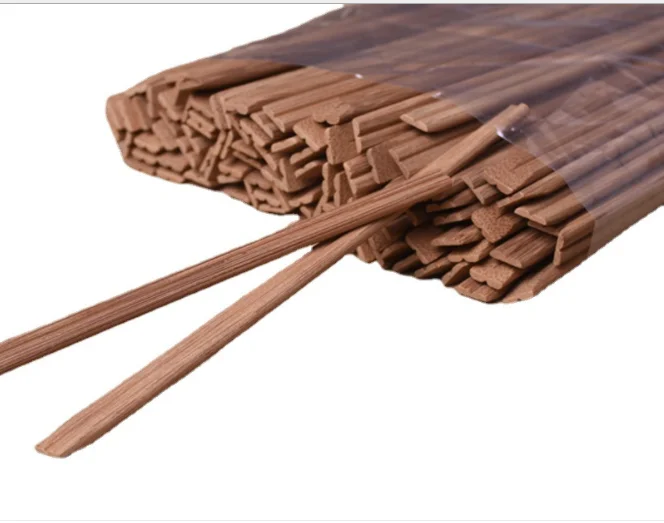
As a brand specializing in disposable chopsticks customization for 15 years, Gorlando has an ultimate pursuit of the craftsmanship and quality of Tenzen chopsticks. We deeply understand the needs of high-end Japanese restaurants for disposable Tenzen chopsticks customization—they not only need to conform to the tone of Japanese culinary culture, but also balance texture, environmental protection and practicality. Therefore, Gorlando’s sushi-specific disposable chopsticks are all made of AAA-grade natural carbonized bamboo or Yoshino cedar, using hand finishing + precise beveling technology. Each batch of products undergoes strict food-grade quality inspection to eliminate burrs, odors and other problems. At the same time, we support exclusive packaging customization, which can print logos and patterns according to the brand style of Japanese restaurants, making disposable chopsticks also a “hidden business card” of the brand.
Combining the common questions from diners and Japanese restaurant owners encountered in daily life, here are several most common questions to help you solve the confusion about disposable chopsticks in high-end Japanese cuisine:
Q1: Are Tenzen chopsticks disposable chopsticks? Will they be environmentally unfriendly after use?
A1: Yes, Tenzen chopsticks are disposable chopsticks, but they are essentially different from ordinary disposable chopsticks in terms of environmental friendliness. Gorlando’s Tenzen chopsticks are made of degradable natural bamboo or sustainably grown Yoshino cedar, meeting food-grade safety standards. They can decompose naturally after use without burdening the environment, making them truly environmentally friendly disposable chopsticks, which are fully suitable for the environmental concept of high-end Japanese restaurants.
Q2: Will the cost be very high to customize disposable Tenzen chopsticks? How about the cost performance?
A2: Actually, no. Gorlando has a large-scale production base and has been focusing on disposable Tenzen chopsticks customization for many years, which can minimize the customization cost. For high-end Japanese restaurants, the cost difference of a pair of high-quality Tenzen chopsticks is very small, but it can greatly improve diners’ dining experience and brand recognition, and even promote repurchase. It can be regarded as a detail upgrade with “small investment and large return.”
Q3: Can Gorlando’s disposable Tenzen chopsticks be adapted to high-end Japanese restaurants of different styles?
A3: Of course. Gorlando supports flexible customization. Whether it is a minimalist, traditional Japanese-style, or modern high-end Japanese restaurant, we can adjust the length, thickness, material of the chopsticks, as well as the packaging design according to the needs. At the same time, we can also provide sample delivery services, allowing the restaurant owner to personally feel the texture of high-end Japanese cuisine disposable chopsticks before determining the customization plan.
Q4: Besides the appearance, what are the other core differences between ordinary disposable chopsticks and sushi-specific disposable chopsticks?
A4: The core differences are mainly in three points: first, the material—sushi-specific disposable chopsticks (such as Tenzen chopsticks) use high-quality odorless materials that do not cover the original taste of sushi; second, the craftsmanship—the center of gravity design and grip polishing are all suitable for the needs of picking up sushi, not easy to slip or break; third, the tone—with a built-in high-end sense of ritual, which can match the quality of Omakase, while ordinary disposable chopsticks are rough and cheap, unable to adapt to high-end scenarios.
In the final analysis, the choice of Tenzen chopsticks for high-end Omakase takeout is never an “overkill,” but a respect for ingredients, diners and the brand. A small pair of disposable chopsticks carries the inheritance of Japanese culinary culture, the pursuit of ultimate dining experience, and the “style dividing line” between high-end Japanese restaurants and ordinary Japanese restaurants. Gorlando has always believed that good disposable chopsticks are never optional accessories, but “detail leaders” that can add points to high-end Japanese cuisine, allowing every Omakase takeout to bring diners a full sense of ritual and happiness from the moment they unpack the chopsticks.
发表回复