
 Русский
 Português
 Español
 Français
 Deutsch
 العربية
 简体中文
简体中文 日本語
日本語 한국어
한국어
Managing a high-volume ramen franchise, Southeast Asian bistro, or trendy Asian fusion concept in North America or Europe comes with a hidden operational nightmare: dishroom bottleneck costs, high staff turnover, and negative Google or Yelp reviews triggered by compromised tableware.
For decades, Asian restaurants across overseas markets relied heavily on black melamine plastic or stainless steel chopsticks under the assumption that reusability equals cost savings. However, commercial dishwashers operating at 185°F with harsh detergents degrade plastic utensils over time, causing warping, discoloration, surface scratches, and residual odor retention. Steel chopsticks feel cold, heavy, and extremely slippery when handling dense ramen noodles or dim sum. When diners obsessively wipe down reusable utensils with hand wipes before eating, brand trust vanishes instantly. Conversely, low-grade breakaway wooden chopsticks frequently split, leave sharp splinters, and emit off-putting chemical bleach odors that ruin a $25 entrée.
This is precisely why leading multi-unit restaurant groups and expanding franchises across New York, Los Angeles, London, and Sydney are making the strategic shift to sourcing premium bamboo chopsticks.
Tableware Comparison: Reusable vs. Low-Grade Wood vs. Premium Bamboo
| Key Metrics | Melamine / Stainless Steel (Reusable) | Cheap Breakaway Wood | Premium Bamboo Chopsticks |
| Labor & Overhead Cost | High initial purchase + massive ongoing labor, water, and 20% annual loss costs | Extremely low unit cost, but drives guest complaints and lowers brand equity | Competitive bulk price + zero labor wash costs and zero replacement losses |
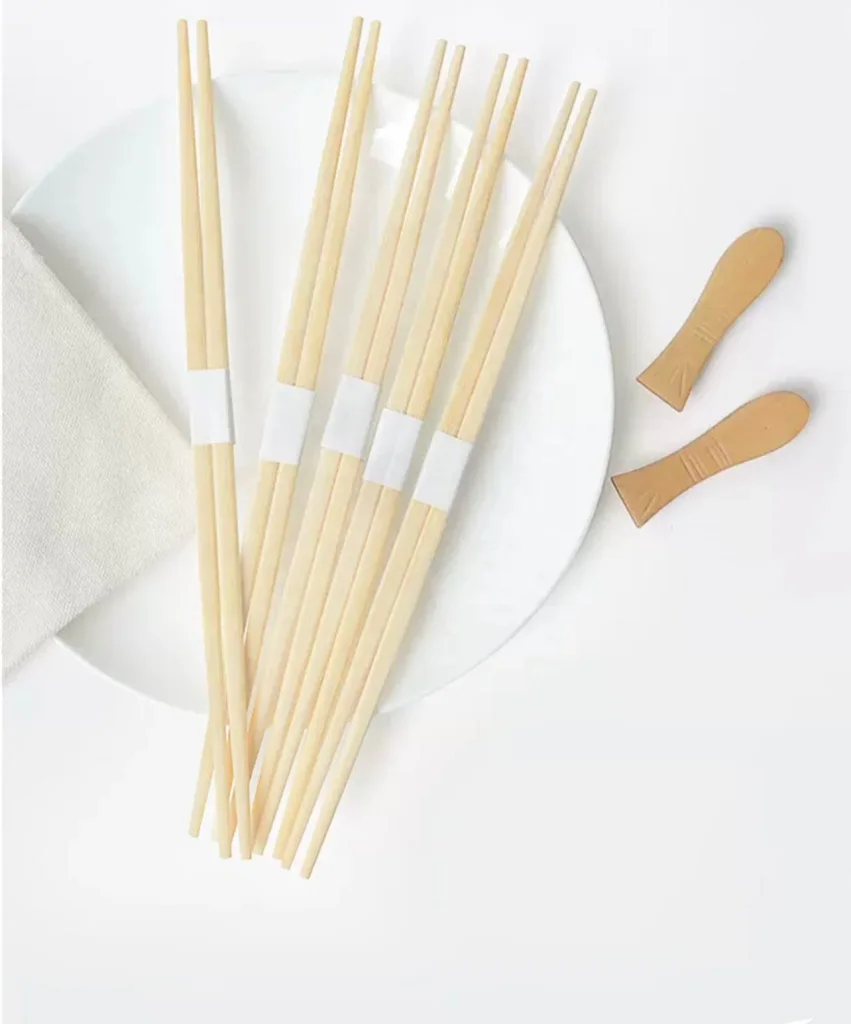
| Hygiene Perception | Prone to water spots and grease film; low diner trust | Often unpackaged or poorly wrapped in thin paper; absorbs humidity | Individually wrapped paper sleeves for total touch-free hygiene |
| Dining Experience & Grip | Heavy, slippery, hard to grasp dense noodles or pork belly | Splinters easily, rough texture, faint chemical bleach odor | Smooth Moso bamboo, non-slip grip, zero splinters, premium feel |
| Table Turnover Efficiency | Slowed down by manual soaking, washing, sorting, and drying bottlenecks | Fast turnover, but packaging tears easily | Instant service-ready, accelerates peak hour table turnover |
| ESG & Regulatory Compliance | High plastic waste disposal cost; non-compliant with eco-trends | Consumes slow-growing timber resources; high carbon footprint | 100% biodegradable bamboo, fast-growing, fully compliant with eco-laws |
The 4 Core Drivers Behind the Industry Upgrade
- Eliminating high dishroom labor and utensil replacement costs: With hourly kitchen labor rates climbing past $20 in key Western markets, the labor hours spent soaking, washing, sorting, inspecting, and sanitizing reusable chopsticks represent a major financial drain. Combined with a 15% to 20% annual loss rate from misplaced or accidentally discarded reusable utensils, switching to high-grade disposable bamboo chopsticks significantly lowers back-of-house operational overhead and boosts peak-hour table turnover.
- Visual proof of hygiene that elevates diner confidence: Diners in Western markets prioritize visible hygiene. Serving individually wrapped bamboo chopsticks sealed in heavy-duty paper packaging offers customers a touch-free, sanitary experience right at the table. This clear demonstration of food safety directly drives higher repeat visits, positive online ratings, and stronger customer loyalty.
- Superior tensile strength and effortless food grip: Manufactured from mature 4-to-6-year-old Moso bamboo processed through high-temperature carbonization and precision polishing, premium bamboo chopsticks offer exceptional structural integrity. They provide a firm, non-slip grip on heavy pork belly, thick ramen noodles, and dumplings without bending or splintering, meeting the rigid requirements of bulk bamboo chopsticks for restaurants.
- Fulfilling ESG sustainability and meeting plastic ban regulations: Governments worldwide are enforcing strict bans on single-use plastics. Unlike hardwood trees that take decades to mature, Moso bamboo matures in just 3 to 5 years, making it a rapidly renewable carbon-sink resource. Utilizing 100% biodegradable hygienic bamboo tableware ensures your brand stays compliant with local environmental laws while appealing to eco-conscious diners.
Procurement Checklist for Overseas Foodservice Buyers
When evaluating manufacturers for overseas imports, procurement teams should inspect:
- Carbonization and drying processing: Avoid untreated raw white bamboo, which carries high moisture content and risks developing mold inside freight containers during long transit times.
- Paper sleeve weight and barrier quality: Choose sleeves made from at least 60gsm high-density paper with food-grade ink printing to prevent tearing or ink bleed in humid kitchen environments.
- International food safety certifications: Verify compliance with international regulations such as FDA, LFGB, and EU 10/2011 to prevent customs delays or shipment rejections.
Frequently Asked Questions (FAQ)
Q1: Will bamboo chopsticks develop mold during ocean freight and warehouse storage?
High-grade hygienic bamboo tableware undergoes strict high-temperature carbonization and kiln-drying processes, keeping moisture levels precisely between 8% and 11%. Combined with moisture-barrier master cartons and sealed paper sleeves, they remain pristine during long-distance ocean transit and extended storage.
Q2: Can we customize the paper packaging with our own brand logo, color scheme, and social media links?
Yes, absolutely. Gorlando Supply provides full-color, high-precision custom printing on paper sleeves. You can incorporate your restaurant logo, brand messaging, social handles, or QR codes directly onto the packaging to enhance brand recognition.
Q3: What is the difference between Twin chopsticks and Tensog chopsticks?
Twin chopsticks are connected at the top, making them cost-effective and ideal for fast-casual dining and takeout. Tensog chopsticks feature an elegant 45-degree angled cut at the top, showcasing the natural bamboo grain, making them the preferred choice for upscale ramen shops, sushi bars, and Asian fusion dine-in tables.
Contact Gorlando
If you are looking to elevate your dining experience while streamlining kitchen efficiency, Gorlando provides factory-direct hygienic bamboo tableware tailored for international foodservice brands. From custom logo paper sleeves to specialized lengths, we deliver reliable bulk supply chains directly to your distribution centers. Contact our expert team today for samples and competitive factory quotes!
发表回复