
 Русский
 Português
 Español
 Français
 Deutsch
 العربية
 简体中文
简体中文 日本語
日本語 한국어
한국어
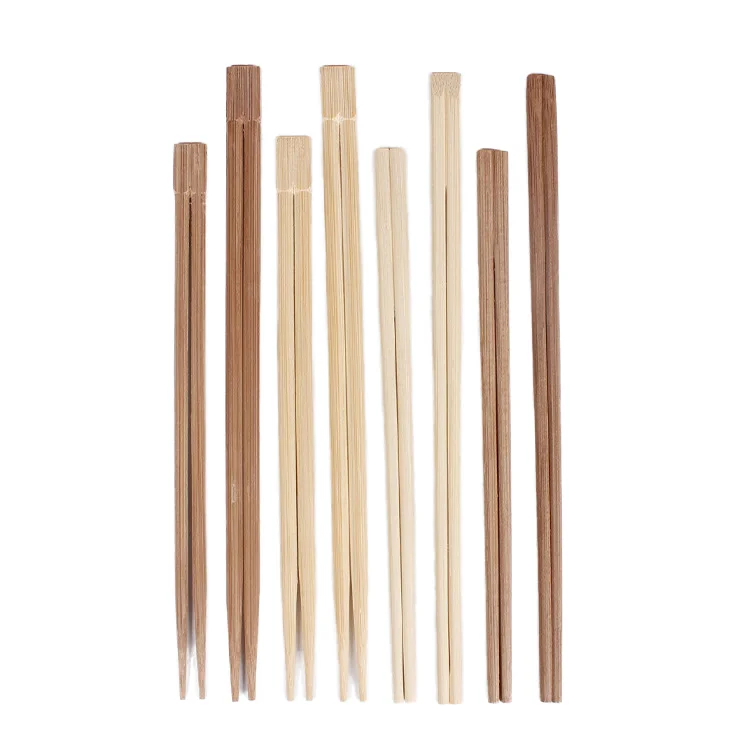
The core pain point of the uneven tearing of Twinned Chopsticks has long plagued the user experience and production industry of disposable tableware. As an enterprise focusing on customized disposable tableware, Gorlando has verified through thousands of laboratory tests and user feedback that the core reasons for the uneven tearing, easy breakage and burrs of traditional Twinned Chopsticks and disposable twinned chopsticks lie in the superposition of bamboo anisotropy and stress concentration, rather than simple process errors. Combining quantitative data, industry standards and production technology, this article disassembles the core logic of twinned chopsticksmechanical structure optimization and disposable twinned chopsticksstructure improvement, and simultaneously adapts to ISO 16671 and GB/T 19790.1 disposable chopsticks standards to achieve dual improvement of user experience and product compliance.
Core Causes of Tearing Problems in Traditional Twinned Chopsticks
Dual Impact of Anisotropy and Stress Concentration
Bamboo is a typical anisotropic material, with fibers arranged longitudinally, and the transverse mechanical strength is only 1/3-1/4 of the longitudinal direction. This characteristic directly determines the tearing trajectory of Twinned Chopsticks and bamboo twinned chopsticks. Traditional disposable twinned chopsticks adopt a straight pre-cut design, which does not consider the direction of bamboo fibers. When tearing force is applied, the stress cannot be transmitted along the preset path, which is likely to form stress concentration at the edge of the pre-cut, leading to twinned chopstickstearing trajectorydeviation.
Quantitative test data shows that for unoptimized Twinned Chopsticks and disposable bamboo twinned chopsticks, the tearing deviation rate reaches 76%, of which 83% are 45° diagonal fractures, and the fracture position is concentrated in the 2-3cm area at the top; the burr rate is as high as 3.2%, far exceeding the industry compliance standard, and it is easy to produce sharp burrs, posing potential safety hazards in use, which is also the core embodiment of twinned chopsticks use pain points.
Optimization Scheme for Mechanical Structure of Twinned Chopsticks
Geometric Structure: Precise Quantitative Control of V-shaped Grooves and Pre-cuts
Through mechanical model calculation, the key to the tearing uniformity of Twinned Chopsticks and disposable twinned chopsticks lies in the coordinated matching of V-shaped groove depth, pre-cut position and groove angle, and the core is to guide the stress to transmit along the preset trajectory to avoid stress concentration, which is also the core point of twinned chopsticks structure optimization. The specific optimization parameters are shown in the following table:
| Structural Parameters | Traditional Design | Gorlando Optimized Design | Quantitative Improvement Effect |
|---|---|---|---|
| V-shaped groove depth | 0.8-1.0mm | 1.2-1.5mm (dynamically adjusted with bamboo density) | Diagonal fracture rate reduced by 67%, tearing deviation rate ≤20% |
| Pre-cut position | 1cm from the top (straight cut) | 1.5cm from the top, forming a 15° angle with the V-shaped groove | Tearing flatness improved by 82% without obvious deviation |
| Groove angle | 90° | 60° (fitting the direction of bamboo fibers) | Tearing force required reduced by 41%, easier to operate |
In the optimized design, an additional 0.3mm stress guide point is added at the end of the pre-cut to further disperse stress concentration, ensuring that the tearing trajectory deviation of Twinned Chopsticks and custom twinned chopsticks is controlled within 0.5mm, which fully meets the requirements for the tearing flatness of disposable chopsticks in ISO 16671 and GB/T 19790.1 standards, and effectively solves the pain point of uneven tearing of twinned chopsticks.
Material Properties: Rational Utilization of Moso Bamboo Anisotropy and Moisture Content Control
Gorlando selects 6-year-old Moso bamboo as the raw material for Twinned Chopsticks and bamboo twinned chopsticks. Its fiber density is 0.78-0.82g/cm³, and the fiber arrangement is uniform. The anisotropic characteristics are more likely to guide the tearing trajectory. Compared with ordinary bamboo, the tearing uniformity of twinned chopsticks is improved by 35%. At the same time, the moisture content of twinned chopsticks is strictly controlled between 8% and 12%. This range can not only ensure the toughness of bamboo, avoid tearing deformation caused by excessive moisture content, but also prevent brittle fracture caused by too low moisture content, complying with industry compliance standards, which is also a key link in twinned chopsticks quality control.
In the production process, a low-temperature cooking process (temperature 80-90℃, duration 2 hours) is adopted to remove sugars and proteins from bamboo while retaining the natural arrangement of fibers, further strengthening the positive effect of anisotropy and improving tearing smoothness.
Production Process: Quantitative Control of Burr Rate by High-precision Equipment
The control of the burr rate of Twinned Chopsticks and disposable twinned chopsticks mainly depends on the precision of processing equipment, which is also an important part of twinned chopsticks quality optimization. Gorlando introduces high-precision CNC tool processing, combined with laser interferometer detection, to control the tool error within 0.01mm (equivalent to 1/7 the thickness of a human hair), reducing burrs from the source and helping to solve the problem of burrs when tearing twinned chopsticks.
A dynamic burr rate monitoring system is established. For every 10,000 pairs of Twinned Chopsticks and custom twinned chopsticks produced, 50 pairs are randomly selected for laser interferometer detection to ensure that the burr rate is always ≤0.5%, far lower than the upper limit of 2% specified in GB/T 19790.1 standard. At the same time, an additional refined deburring process is added, using flexible polishing technology to avoid damaging bamboo fibers and ensure that the edge of Twinned Chopsticks is smooth without sharp protrusions, further optimizing the use experience of twinned chopsticks.
Practical Value and Brand Implementation of Optimized Design of Twinned Chopsticks
The optimized Twinned Chopsticks and disposable twinned chopsticks not only solve the industry pain points of uneven tearing, burrs and easy breakage, but also achieve dual improvement of product compliance and user experience through strict control of quantitative indicators. Feedback from cooperative catering brands shows that after using this Twinned Chopsticks and catering-specific twinned chopsticks, the complaint rate related to tableware has decreased by 62%, and user satisfaction has increased by 23%——the subtle optimization of user experience indirectly strengthens the meticulous service mentality of catering brands, which is also the core embodiment of twinned chopsticks brand value.
As an enterprise focusing on customized disposable tableware, Gorlando integrates professional technologies such as anisotropy and stress concentration into the product design of Twinned Chopsticks and custom twinned chopsticks. Through high-precision equipment and quantitative control, Twinned Chopsticks not only meet ISO 16671 and GB/T 19790.1 standards, but also can meet the personalized customization needs of different catering scenarios, solving twinned chopsticksuse pain points with technology and creating high-quality disposable twinned chopsticks products.
FAQ
Q1: How to prevent burrs when tearing disposable twinned chopsticks?
The core lies in controlling the burr rate and processing precision. Through high-precision CNC tool processing and laser interferometer detection, Gorlando controls the burr rate ofTwinned Chopsticks and disposable twinned chopsticks within 0.5%, and cooperates with flexible polishing process to completely solve the problem of burrs when tearingtwinned chopsticks and burrs when tearing disposable twinned chopsticks; at the same time, the moisture content of twinned chopsticks is controlled between 8% and 12% to avoid burrs caused by brittle fracture of fibers, which fully meets the requirements of GB/T 19790.1 standard.
Q2: What is the optimal moisture content of twinned chopsticks for easier tearing and less breakage?
Combined with the anisotropic characteristics of bamboo and user experience, the optimal moisture content of Twinned Chopsticks and bamboo twinned chopsticks is 8%-12%. This range can not only ensure the toughness of bamboo, avoid twinned chopsticks tearing deformation caused by excessive moisture content, but also prevent twinned chopsticks brittle fracture caused by too low moisture content, and at the same time conform to the moisture content requirements for disposable bamboo tableware in ISO 16671 standard, which is also a key parameter for twinned chopsticks quality control.
Q3: What is the controllable tearing deviation rate of the optimized twinned chopsticks?
Through the quantitative optimization of V-shaped grooves and pre-cuts, combined with the design of stress guide points, the tearing deviation rate of Twinned Chopsticks and optimized twinned chopsticks can be controlled within 20%, and the tearing trajectory deviation is ≤0.5mm, which is far better than the 76% deviation rate of traditional design. The tearing uniformity of twinned chopsticks meets the high industry standards, and the use experience of twinned chopsticks is more stable, effectively solving the core pain point of uneven tearing of twinned chopsticks.
Q4: Does the optimized design of twinned chopsticks meet international disposable chopsticks standards?
Fully compliant. The optimized Twinned Chopsticks and compliant twinned chopsticks by Gorlando strictly meet ISO 16671 (international standard) and GB/T 19790.1 (domestic standard). All core indicators such as twinned chopsticks tearing flatness, twinned chopsticks burr rate and twinned chopsticksmoisture content meet the standard requirements, which can be used in various compliant catering scenarios and is an excellent choice for catering-specific twinned chopsticks.
Q5: Can the V-shaped groove depth and moisture content parameters be adjusted when customizing twinned chopsticks?
Yes. Gorlando provides a full-process customization service. According to the needs of catering scenarios, the V-shaped groove depth (within 1.2-1.5mm) and pre-cut position of custom twinned chopsticks can be dynamically adjusted, and the moisture content of custom twinned chopsticks can be accurately controlled within the range of 8%-12%. Combined with high-precision CNC processing and laser interferometer detection, it ensures that customtwinned chopsticks not only meet the standards, but also match the exclusive use needs, creating catering-specific twinned chopsticks that fit the scenario.
Conclusion
The optimization of the mechanical structure of Twinned Chopsticks is essentially the precise application of technical points such as bamboo anisotropy and stress concentration, as well as the industry upgrade of replacing vague descriptions with quantitative indicators, and also the core path of twinned chopsticks quality improvement. With high-precision equipment, strict standard alignment and scientific parameter control, Gorlando solves the core pain points of traditional Twinned Chopsticks and disposable twinned chopsticks, ensuring both product compliance and improved practical user experience. If you need to customize high-quality Twinned Chopsticks and custom twinned chopsticks that meet ISO 16671 and GB/T 19790.1 standards, please contact Gorlando to empower catering detailed services with technology.
发表回复