
 Русский
 Português
 Español
 Français
 Deutsch
 العربية
 简体中文
简体中文 日本語
日本語 한국어
한국어

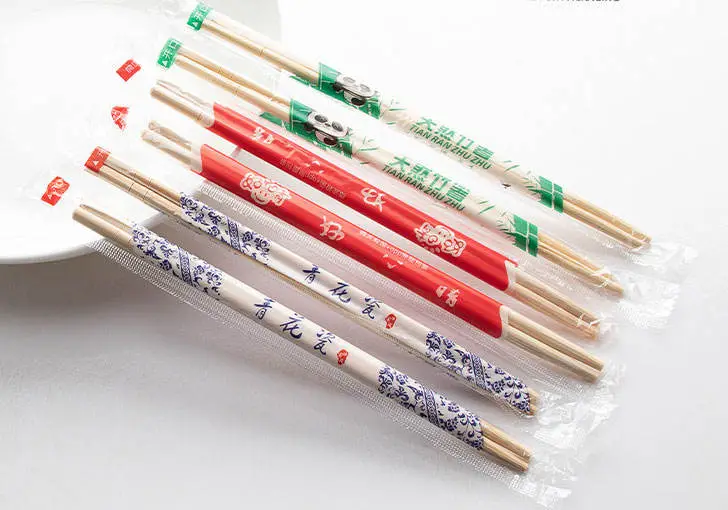
Most procurement professionals prioritize unit prices when sourcing disposable chopsticks from suppliers. However, industry practice proves that the factory price only accounts for about 60% of the total procurement expenditure. Many orders with low unit prices end up with shrinking profit margins due to overlooked hidden expenses, making it essential for professional buyers to calculate the full-chain procurement cost of disposable chopsticks.
A common procurement pitfall is focusing solely on upfront unit prices while ignoring follow-up operational costs. After serving thousands of bulk procurement orders, we find that many buyers frequently switch suppliers for trivial price differences, yet neglect cumulative costs from packaging adjustment, logistics surcharges, product breakage, and after-sales communication. The total cost of ownership for disposable chopsticks, rather than a single factory quote, defines the true value of a procurement deal.
1. Packaging Costs: Hidden Expenses Beyond Basic Wrapping
When calculating budgets for custom disposable chopsticks, most buyers only budget for basic packaging materials, ignoring a series of hidden costs throughout design, production, and transportation. Different packaging styles create huge gaps in overall procurement expenses.
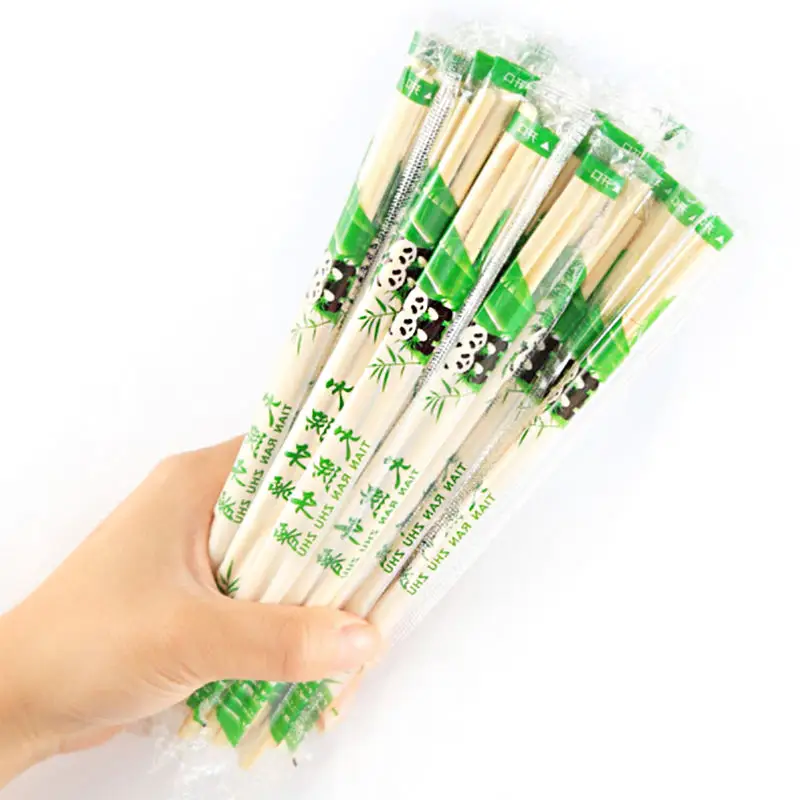
Individually wrapped catering-specific disposable chopsticks feature higher hygiene levels and premium appearance, ideal for high-end restaurants and hotel banquets. Nevertheless, they require more raw materials and manual packaging labor, leading to higher production costs for bulk orders. In contrast, bulk row packaging boasts higher packaging efficiency and lower labor costs, perfectly suitable for fast food and daily catering scenarios.
In fact, buyers with custom branding demands often overlook plate fee amortization. Custom printed packaging with exclusive logos and patterns requires independent plate making, and the fixed plate cost will be allocated to each product. For small-batch orders, the amortized packaging cost per unit will rise significantly, which is the main reason for high costs in small-scale customized procurement.
More importantly, excessive packaging increases cargo volume and dimensional weight, directly driving up shipping fees. In international freight rules, shipping charges are calculated based on the higher value between the actual weight and dimensional weight of goods. Light goods with excessive volume are defined as bulky cargo and charged by dimensional weight. Unreasonable redundant packaging raises freight costs substantially even without increasing actual product weight. Therefore, calculating the volume-to-weight ratio at the packaging design stage and streamlining redundant structures is a key skill for senior buyers to control TCO. A medium-sized catering chain optimized its procurement scheme by replacing thick individual paper sleeves with lightweight eco-friendly straps for disposable chopsticks. This optimization, implemented in Q2 of the first year, reduced annual transportation costs by approximately 17%, verified by our two consecutive years of shipment data comparison.
2. Logistics Costs: Overlooked Charges Beyond Basic Freight
Logistics is the most volatile cost segment in large-batch disposable chopstick procurement and the top cause of budget overruns. Most buyers only calculate basic ocean or land freight while ignoring various common industry surcharges that accumulate into substantial extra expenses.
These charges have clear official names in freight systems, including Peak Season Surcharge (PSS) for surging cargo volume in peak periods, Bunker Adjustment Factor (BAF) adjusted according to fluctuating fuel prices, and Local Surcharge (LSS) for shipments to non-base ports. Senior buyers will clarify the ownership of each item when reviewing FOB and CIF quotations, avoiding the passive situation of “low freight quotation but high surcharge settlement”. As light cargo, bamboo and wood tablewares are highly prone to excessive dimensional weight charges, further amplifying overall logistics cost fluctuations.
Furthermore, destination port devanning fees, inland terminal delivery fees, and warehouse detention fees for incoming goods are common hidden logistics expenditures. Most procurement quotes only cover port arrival costs, leaving all subsequent miscellaneous fees to be borne by buyers, further increasing total procurement expenses. In addition, humid maritime environments easily cause dampness and mildew on bamboo and wood products, leading to implicit operational losses from claim processing, insurance application and product replacement that disrupt normal supply schedules.
3. Breakage and After-Sales Losses: High Risks Behind Low Damage Rates
Naturally sourced eco-friendly disposable chopsticks inevitably suffer losses during long-distance transportation and stacked storage. Industry experience shows that the average sea shipment breakage rate of bamboo and wood disposable chopsticks ranges from 0.5% to 1%. Most procurement contracts formulate sampling inspection standards referring to ISO sampling procedures. If defective products exceed the Acceptable Quality Level (AQL) threshold during inspection, buyers have the right to deduct payment or reject the entire batch. In this case, a seemingly negligible 1% breakage rate may lead to 100% order loss risk, explaining why low-price orders often end up unprofitable.
Rough loading and unloading and high-layer stacking during transit cause chopstick breakage, package scattering, and product mixing. More importantly, most procurement contracts include random inspection deduction clauses—unqualified batch inspection results in full-order deductions or rejections, instead of only deducting damaged products. Returns and re-shipments lead to irreversible losses including round-trip logistics fees, product scrapping costs, and supply delay losses, which also damage long-term brand cooperation credibility.
4. Inspection and Communication Costs: Invisible Labor and Time Expenses
Most buyers only account for physical product costs while ignoring intangible management costs in remote procurement. Bulk customized disposable chopstick procurement involves repeated sample confirmation, specification verification, third-party quality inspection, and after-sales rectification communication, all of which consume enormous manpower and time.
Ambiguous specification communication in the early stage easily leads to mass production deviations and full-batch rework, causing material waste and delivery delays. Conventional third-party inspection services such as SGS and Intertek also require independent service fees, which become a continuous long-term expenditure for frequent bulk procurement. Stable supplier cooperation and standardized production processes can greatly reduce such implicit management costs.
5. TCO Breakdown for Standard 20GP Disposable Chopstick Orders
Based on years of manufacturing and supply experience, we have sorted out the full-dimensional cost proportion of standard 20GP disposable chopstick orders, covering all hidden expenditure items, with targeted optimization strategies to realize data-driven improvement:
| Core Cost Category | Overall Proportion | Details of Hidden Expenses | Key TCO Optimization Strategies |
|---|---|---|---|
| Factory Production Cost | 62% | Raw bamboo material selection, mechanical polishing, basic quality inspection, manual sorting fees | Focus on supplier’s raw material batch stability and moisture content control rather than simply cutting prices to avoid quality losses from the source |
| Comprehensive Packaging Cost | 13% | Custom plate fee amortization, packaging materials, manual packaging, bulky cargo freight loss caused by dimensional weight gain | Adopt universal templates for small orders to avoid high plate fees; calculate volume-to-weight ratio in advance for bulk orders; prioritize lightweight eco-friendly packaging to control bulky cargo billing risks |
| Full-Cycle Logistics Cost | 15% | Basic freight, PSS/BAF/LSS shipping surcharges, devanning fees, inland delivery, warehouse detention fees | Refine contract clauses to clarify the ownership of all surcharges under FOB/CIF terms and eliminate hidden settlement markups |
| Breakage, Inspection & After-Sales Cost | 7% | Damage compensation, mildew loss, third-party inspection, rework and rectification, return shipment loss | Require suppliers to provide pre-shipment full inspection reports and moisture content data to stabilize quality control and reduce high-frequency third-party inspection costs and loss risks |
| Communication & Management Cost | 3% | Labor and time cost for repeated sample confirmation, specification docking, order follow-up and after-sales processing | Establish standardized procurement specifications, fix product and inspection standards, and cooperate with long-term stable suppliers to reduce repeated docking costs |
6. Three Core TCO Control Points
Based on years of experience serving bulk procurement clients, all implicit cost optimizations can be summarized into three executable control actions, enabling precise cost reduction without vague strategies:
- Packaging Volume Audit: Focus on packaging functionality and dimensional data rather than only appearance and unit price. Require suppliers to provide accurate volume data per carton and per pallet with each packaging proposal. Prioritize lightweight packaging materials that maintain full functionality and premium texture but reduce overall volume and weight, fundamentally preventing excess freight from bulky cargo billing.
- Logistics Clause Whitelist: Actively list all potential shipping surcharges in procurement contracts, including peak season surcharges, bunker adjustment fees, and remote port surcharges, and specify the responsible party for each item in advance. Lock all logistics miscellaneous fees to completely eliminate unknown bills and budget overruns during settlement.
- Supplier Quality Cost Binding: Clarify quality compensation clauses with suppliers. If batch goods have quality problems such as mildew, excessive breakage, or unqualified inspection, all implicit losses including product scrapping, round-trip logistics fees, and third-party inspection fees shall be borne by suppliers. This mechanism accurately screens high-quality manufacturers with independent factories and complete quality control systems.
Procurement FAQ
Q1: How to balance premium packaging appearance and strict budget control for custom disposable chopsticks?
A: The core is to balance material cost, plate cost and logistics volume cost with a standardized execution framework. First, confirm order quantity before customization: adopt universal packaging bags and laser engraving for small orders to avoid high exclusive plate fees. Second, upgrade texture logic: premium presentation does not rely on thickened paper. Lightweight food-grade eco-friendly paper with delicate texture delivers excellent printing effect and high-end appearance while reducing dimensional weight and bulky cargo freight. Third, amortize costs in advance: negotiate plate fee sharing rules with suppliers for bulk orders to lower unit customized costs. Gorlando provides one-on-one optimal packaging solutions based on order scale and shipping methods to balance appearance, compliance and cost performance.
Q2: How to fundamentally prevent sea shipment mildew and transit breakage for bulk disposable chopstick orders?
A: Loss prevention relies on dual control of source quality control and full-process protection. At the raw material stage, professional manufacturers strictly control bamboo moisture content within 0-5% to eliminate mildew risks and select high-quality bamboo without cracks or insect erosion to reduce basic breakage probability. At the production stage, full-batch manual sorting and machine inspection are implemented before shipment to eliminate defective products. At the packaging stage, reinforced cartons and layered protective structures are adopted to adapt to long-distance sea shipment stacking and handling. At the shipment stage, all goods undergo fumigation treatment to meet international freight standards. With independent raw material bases and dual production plants, Gorlando stabilizes shipment loss rates at an industry-leading low level via standardized quality control procedures.
Q3: How to continuously reduce implicit management costs and improve procurement efficiency for long-term bulk orders?
A: The most effective long-term solution is to establish a standardized and fixed procurement cooperation system. First, formulate exclusive procurement specifications to unify product dimensions, packaging standards and AQL inspection thresholds, avoiding repeated verification for each order. Second, cooperate with stable compliant suppliers long-term to eliminate time costs from frequent sample confirmation, qualification review and unfamiliar docking. Third, reduce third-party inspection frequency appropriately on the premise of stable supplier quality control, directly saving inspection and communication costs.
Ultimately, identifying these hidden costs marks the beginning of professional procurement management.
We always hope our clients can better understand their own procurement cost structure than suppliers. Only by recognizing the full-chain losses behind unit prices can buyers realize that suppliers with stable quotations, compliant minimalist packaging, clear logistics clauses and guaranteed low quality losses always deliver the best long-term cost performance in the TCO model.
If your bulk disposable chopstick procurement still relies on simple price comparison, feel free to send us your procurement specifications and shipment requirements. Gorlando will customize an exclusive TCO comparison solution for you, accurately dissect all hidden costs, help you avoid low-price traps and achieve refined cost reduction and efficiency improvement.
发表回复