
 Русский
 Português
 Español
 Français
 Deutsch
 العربية
 简体中文
简体中文 日本語
日本語 한국어
한국어
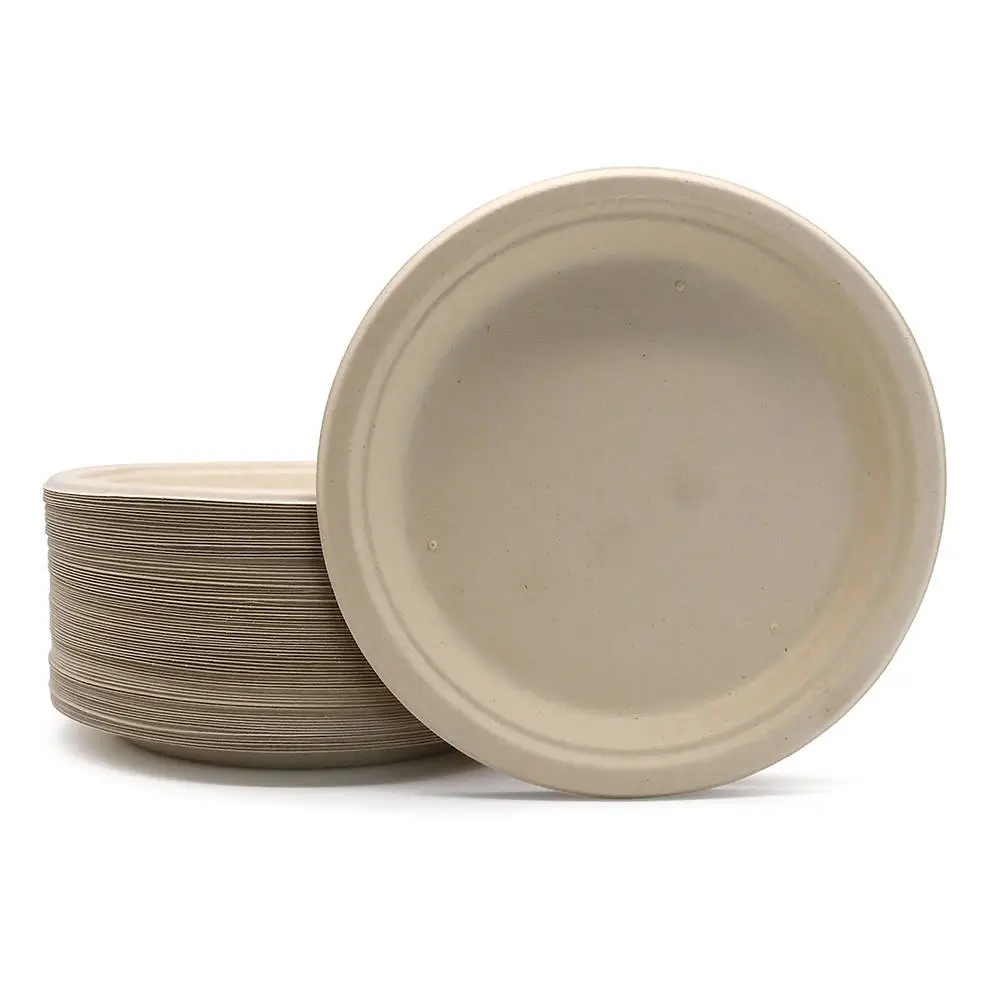
It’s a common scene: as soon as you serve hot soup on a biodegradable disposable plate, it quietly absorbs moisture and softens, with soup leaking along the edges; when takeout arrives home, the bottom of the container is already damp and stuck to the bag. Biodegradable disposable plates are favored for their environmental friendliness, but “moisture resistance” seems to be a pain point for many users. In fact, as long as you find the right methods, you can make eco-friendly tableware not only uphold the green concept but also calmly meet various dining needs.
Why are biodegradable disposable plates more prone to getting wet? Actually, it’s closely related to material characteristics. Most biodegradable plates are made of natural substrates such as corn starch and sugarcane bagasse. These materials themselves have a certain water absorption capacity. If the waterproof process is not in place during production, sogginess is likely to occur when encountering hot food, soup, or long-term storage. But this doesn’t mean biodegradable materials have to be “delicate”—the key lies in process optimization on the production side and reasonable adaptation on the use side, and combining both can effectively solve the problem.
In the production and customization link, process details directly determine the moisture-proof ability of disposable plates. When customizing disposable plates, Gorlando makes precise optimizations for different usage scenarios. For example, for catering customers who need to hold hot food and soup, it adopts food-grade PE lamination technology to form a uniform protective film on the surface of the biodegradable substrate, with a thickness controlled at around 0.03mm. This can not only block moisture penetration but also retain the environmental attributes of the biodegradable substrate; for scenarios requiring microwave heating, it also matches a high-temperature resistant and waterproof coating, which has been tested to hold soup at 65℃ for 2 hours without softening. The structural design of the plate also contains knowledge—deepening the bottom groove and adding edge reinforcement lines can not only improve load-bearing capacity but also reduce direct soaking of the contact surface between the soup and the plate. These seemingly small adjustments can significantly delay sogginess.
In daily use, some small tricks can also help disposable plates “resist moisture”. Here are a few methods that have been tested and proven effective:
- Follow the “dry first, wet later” principle when serving food: put dry ingredients such as rice and vegetables first, then pour hot soup and sauces to avoid the plate directly contacting a large amount of liquid;
- When delivering takeout, put a layer of oil-absorbing paper at the bottom of the plate, which can effectively absorb condensed water generated during transportation and reduce bottom moisture;
- If you can’t finish the meal in a short time, don’t leave it in a sealed bag for a long time—proper ventilation can reduce moisture accumulation;
- When choosing plates, prioritize checking the waterproof process label rather than simply pursuing thickness. An overly thick plate with poor craftsmanship may have poor moisture-proof effect.
Some people may ask, can thickening the plate better prevent moisture? In fact, thicker is not necessarily better. A reasonable thickness combined with optimized waterproof technology can find a balance between environmental protection, cost, and moisture-proof effect. In Gorlando’s customization solutions, it will recommend the most suitable thickness and process combination according to the customer’s food type and delivery time. For example, plates designed for takeout scenarios focus on lamination technology and water-locking structures, while those used for cold food storage optimize surface moisture-proof treatment while maintaining lightness and environmental protection.
Frequently Asked Questions
Q: Can biodegradable disposable plates be used to hold high-temperature and high-humidity food like hot pot broth?A: Of course, but you need to choose products specifically customized for high-temperature scenarios. For example, the disposable plates customized by Gorlando for hot pot brands adopt a double-layer lamination + water-locking structure design, which can withstand high temperatures of 95℃. Even when holding boiling broth, it can remain non-softened and non-leaking for more than 1 hour. However, it is recommended to avoid direct open-flame heating for a long time.
Q: If the disposable plate is slightly soft and damp after use, can it still ensure environmental degradation?A: It has no impact at all. The degradable property of biodegradable disposable plates is determined by the substrate itself. The surface waterproof coating is mostly degradable materials or food-grade environmentally friendly materials. Even if the plate is slightly soft and damp during use, it can still degrade normally in the natural environment without causing additional pollution.
Different scenarios have different moisture-proof needs and corresponding solutions for disposable plates. You can refer to the following scenario adaptation table for details:
| Application Scenario | Core Moisture-Proof Requirement | Gorlando Customization Optimization Direction | Actual Moisture-Proof Effect |
|---|---|---|---|
| Hot Food Dining-in | High temperature resistance, soup leakage prevention | Food-grade PE lamination + thickened edge design | No softening at 65℃ for 2 hours |
| Takeout Delivery | Condensed water prevention, bump resistance | Water-locking groove + bottom non-slip coating + lamination technology | No leakage and no sticking to bags during 3-hour transportation |
| Hot Pot/High-Temperature Broth | Resistance to temperatures above 95℃ | Double-layer lamination + reinforced edge-locking structure | No deformation when holding boiling soup for 1 hour |
| Cold Food/Dessert Storage | Mild moisture prevention, shape retention | Lightweight substrate + surface moisture-proof treatment | No moisture absorption or softening during 4-hour storage |
In fact, the moisture-proof problem of disposable plates is essentially a balance between “environmental attributes” and “user experience”. With the continuous upgrading of technology, customized brands like Gorlando have been able to make biodegradable disposable plates both environmentally friendly and practical through precise scenario adaptation and detail optimization. Next time when choosing or customizing disposable plates, you may wish to pay more attention to the waterproof process and structural design, so that eco-friendly tableware can truly adapt to various needs of daily catering and bid farewell to the trouble of sogginess.
发表回复