
 Русский
 Português
 Español
 Français
 Deutsch
 العربية
 简体中文
简体中文 日本語
日本語 한국어
한국어
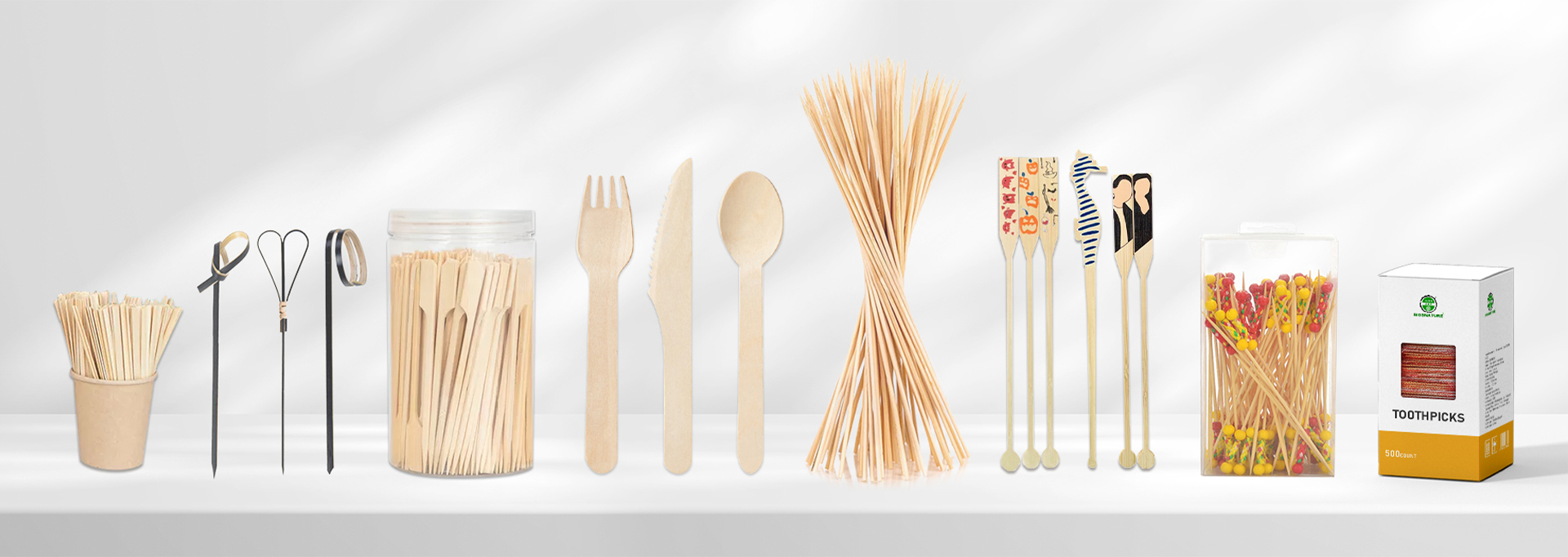
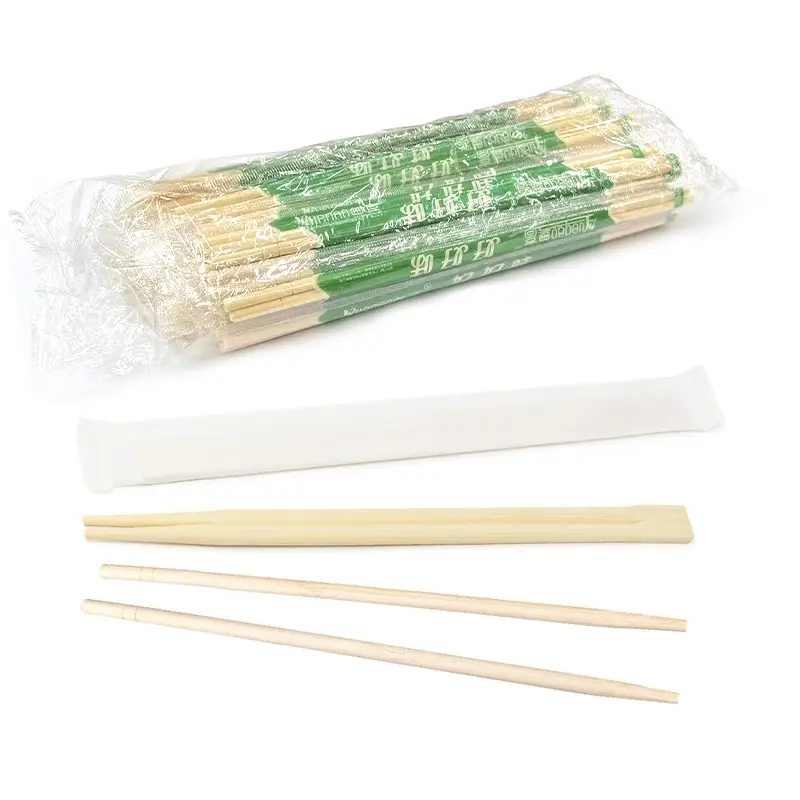
Many large-scale catering brands fall into an abnormal dilemma when expanding stores rapidly: as the number of stores doubles and consumption of disposable chopsticks surges, costs that should drop due to scale effect keep rising instead. Frequent supply shortages, inconsistent quality and non-compliant customization also occur frequently. Most operators focus only on the unit purchase price, but fail to realize that the real cost driver is never the price of a single pair of chopsticks, but the inefficiency, fragmentation and weak risk resistance of the entire supply chain.
As a high-frequency essential consumable in catering scenarios, disposable chopsticks will magnify tiny supply chain flaws infinitely by the number of stores, especially when brands require unified image, compliance standards and customized services. We sorted out the three most common cost black holes of disposable chopsticks in the industry, each quietly eroding brand profits.
Decentralized purchasing by individual stores directly eliminates all advantages of scale bargaining. Most brands adopt independent store purchasing in the early stage of expansion. Dozens or hundreds of stores connect with small suppliers separately, which not only fragments the purchase volume of disposable bamboo chopsticks, but also fails to reduce the cost of mold opening and printing for custom logo disposable chopsticks. Small suppliers have limited capacity and loose quality control, resulting in chopsticks with different thickness, materials and odor levels across stores. This not only damages the unified brand vision, but also generates hidden costs due to frequent returns and exchanges. More realistically, brands have no bargaining power in a decentralized state, can only passively accept scattered quotations from suppliers, and completely lose control of costs.
Focusing only on the unit purchase price while completely ignoring the Total Cost of Ownership (TCO) is the easiest trap for brands. Many managers choose low-cost disposable chopsticks to reduce book costs, but fail to calculate subsequent comprehensive expenses: low-cost products are prone to mildew and breakage, causing customer complaints and negative reviews; non-food-grade materials cannot pass compliance testing and face rectification risks; high rework costs of customized products with color difference and missing printing far exceed the savings in unit price. In large-scale operations, the compliance cost, quality inspection cost, loss cost and after-sales cost of food-grade disposable chopsticks are often several times the unit purchase price. Focusing only on front-end price is essentially picking up sesame seeds and losing watermelons.
Single-source supply binding may paralyze the entire brand with one fluctuation. Especially for brands with fixed custom disposable chopsticks needs, long-term reliance on a single supplier seems stable, but actually hides huge risks. Abnormal climate in raw material producing areas, factory capacity adjustment, and packaging material price increases will lead to delayed delivery of disposable chopsticks. With stores all over the region, once supply is cut off, the premium of temporary goods transfer and losses of store operation are far higher than the cost of long-term decentralized supply, which is the most unwanted supply chain crisis for many large-scale brands.
According to brands of different scales and layouts, we sorted out a three-tier disposable chopsticks collective procurement model based on practical experience, which can be directly implemented and adapted:
| Tier | Applicable Conditions | Key Strategies | Expected Outcomes |
|---|---|---|---|
| Regional Procurement | Cross-provincial stores with uneven density | Divide regions into East China, South China and Southwest China, set up centralized warehouses, integrate regional disposable chopsticks demand for unified purchasing and nearby distribution | Reduce logistics costs by 15%-20%, improve scheduling efficiency of customized production |
| National Unified Procurement | Over 100 widely distributed stores | Lock 2-3 leading suppliers, sign annual frameworks, unify compliant disposable tableware standards, and lock prices and delivery cycles | Reduce disposable chopsticks unit price by 8%-12%, achieve full consistency in quality |
| JIT Zero Inventory | Stores concentrated in a single urban cluster | Suppliers deliver directly to stores daily/weekly, no central warehouse inventory, produce custom disposable bamboo chopsticks on demand | Greatly reduce warehousing costs, inventory loss approaches zero |
The transformation of a medium-sized chain catering brand is highly referential. The brand originally had 32 stores, and each store purchased disposable chopsticks independently before, with an annual total consumption of about 3.2 million pairs, chaotic quality and high costs. After transforming to regional procurement, the annual purchase volume was integrated to 11 million pairs, and large-scale suppliers were unified. The unit price of disposable bamboo chopsticks dropped significantly, saving a lot of expenses only on consumables every year. At the same time, unified custom logo and food-grade standards reduced customer complaint rate by more than 45%, and brand image and operation efficiency improved simultaneously.
To stabilize the supply chain of disposable chopsticks, in addition to optimizing the procurement model, three risk control methods must be implemented:
- Dual-source flexible supply: The main supplier undertakes 60%-70% of orders, and the alternative supplier retains 30%-40% share. Customized orders are rotated regularly to ensure both suppliers maintain active production capacity and avoid unilateral supply interruption.
- Dual locking of price and customization: Clarify price protection clauses in annual contracts, and agree on the process standards, color difference range and delivery cycle of logo custom disposable chopsticks to eliminate temporary price increases and quality shrinkage.
- Regular third-party random inspections: Randomly inspect each batch of food-grade disposable chopsticks every quarter, complete full-item compliance testing, keep inspection reports, and avoid quality and compliance risks from the source.
As a professional service provider focusing on disposable tableware customization, Gorlando has deep roots in the industry for many years. It can provide one-stop solutions from product design, large-scale production to national distribution for brands’ disposable chopsticks procurement, customization and compliance needs. With stable capacity, strict quality control and flexible supply mode, it helps brands solve supply chain cost problems.
Frequently Asked Questions
Q1: Can brands with a small number of stores save money through disposable chopsticks collective procurement?
For brands with less than 20 stores, blind national collective procurement may not be cost-effective. They can first form a joint procurement group with regional brands of the same category to integrate disposable bamboo chopsticks demand and improve bargaining power, and then upgrade the procurement model after store scale expansion.
Q2: The mold opening cost of custom disposable chopsticks is high, how to dilute it through the supply chain?
Sign a long-term framework agreement with suppliers, allocate mold opening costs to annual purchase volume, and select general molds with partial customization. This not only retains brand identification, but also greatly reduces customization costs. Gorlando also provides a variety of general molds for brands to choose from.
Q3: How to ensure compliant disposable tableware meets standards for a long time and avoid temporary rectification?
Choose suppliers with a stable quality control system, ask for full-item inspection reports before cooperation, agree on a quarterly random inspection mechanism during cooperation, and give priority to environmentally friendly and compliant materials such as bamboo. Control compliance from all links of material selection, production and packaging.
Q4: How should brands respond when suppliers raise prices due to raw material increases?
First verify whether the price increase is an industry-wide rise. If it is a normal fluctuation in raw materials, negotiate to set an upper limit of increase; if it is an unreasonable unilateral price increase, immediately activate alternative suppliers for price comparison, and balance cost pressure through market competition.
The core of store expansion is to hedge the cost pressure of scale growth with supply chain efficiency. Although disposable chopsticks are small, they are a key entry point to test supply chain capabilities. Jumping out of the unit price trap and reconstructing the collective procurement and supply system can turn scale into real cost advantages rather than profit burdens.
发表回复