
 Русский
 Português
 Español
 Français
 Deutsch
 العربية
 简体中文
简体中文 日本語
日本語 한국어
한국어
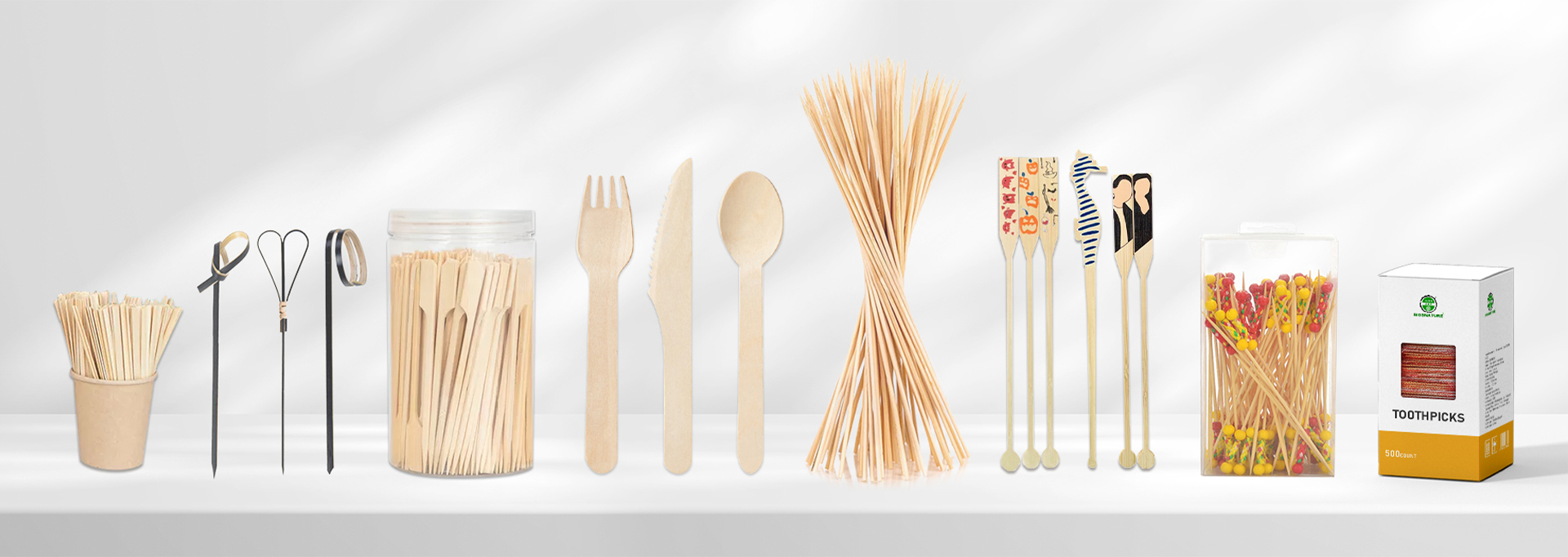
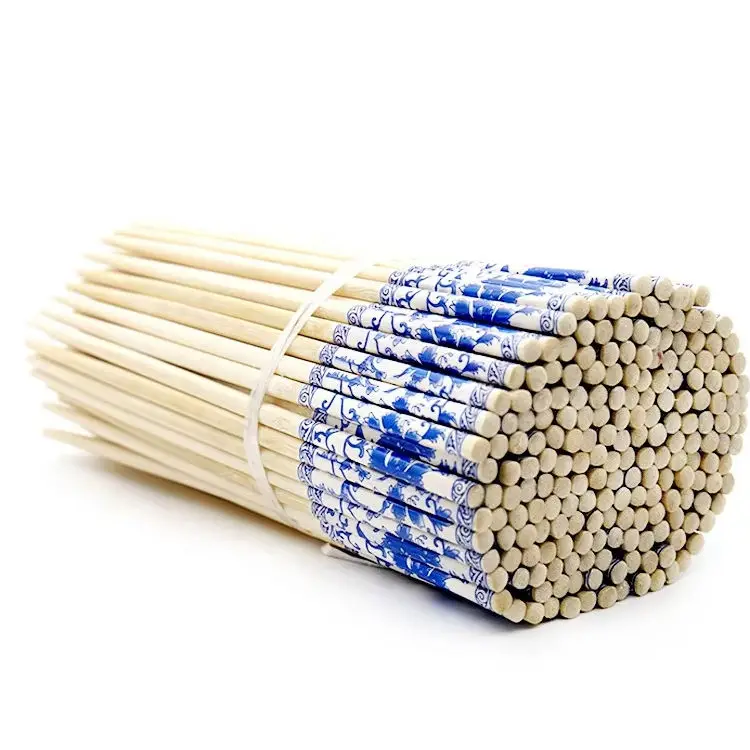
In 2026, the green transformation of the catering industry is accelerating. Disposable tableware selection is directly related to operating costs, compliance risks and brand reputation. Among them, moso bamboo disposable chopsticks and birch disposable chopsticks are still the mainstream choices in the market. Combined with the latest test data in 2026, industry compliance standards and commercial scene feedback, Gorlando comprehensively disassembles the two from four core dimensions: performance, cost, environmental protection and compliance, and provides targeted selection plans to help business entities make accurate decisions.
| Comparison Dimension | Moso Bamboo Disposable Chopsticks | Birch Disposable Chopsticks | Procurement Decision Guide |
|---|---|---|---|
| Mohs Hardness/Compression Resistance | High (high fiber density) | Low (loose wood structure) | Bamboo chopsticks have 35% higher breaking resistance |
| High Temperature Stability Test | No bending under continuous frying at 120°C | Prone to warping in boiling water at 100°C | Bamboo chopsticks are suitable for hot pot/frying formats |
| Fiber Fineness | Longitudinal long fibers (need fine grinding to remove burrs) | Uniform short fibers (naturally extremely smooth) | Birch chopsticks are suitable for high-end desserts/light meals |
| Degradation Efficiency (Industrial Composting) | 60-90 days (100% degradation) | 120-150 days (slow degradation) | Bamboo chopsticks are more in line with 2026 ESG audits |
| Carbon Sink Contribution/Forest Protection | Extremely high (3-year renewable resource) | Low (20-year maturation cycle) | Bamboo chopsticks have better carbon neutrality attributes |
| Compliance Standards | GB/T 19790 / FSC / FDA | GB/T 19790 / FSC / FDA | Both meet global food-grade safety thresholds |
| Raw Material Growth Cycle | 3 years, fast regeneration, stable supply | 20 years, long maturation cycle, low supply elasticity | Bamboo chopsticks have more advantages in bulk procurement cost |
From the perspective of test data, the core demand for disposable chopsticks in the catering industry in 2026 has shifted from “basic practicality” to “compliance + environmental protection + adaptability”, which is also the key reason why most business entities re-examine their selection. The high hardness and fiber density of bamboo chopsticks make them perform outstandingly in high-temperature formats such as hot pot and frying. They can still maintain stable shape under continuous frying at 120°C. Compared with the shortcoming of birch chopsticks that are prone to warping in boiling water at 100°C, their adaptability is obviously better.
However, many business entities also have concerns. The humidity is high during the plum rain season in the south, and moso bamboo disposable chopsticks are prone to mold, which is a common pain point in the commercial use of bamboo chopsticks. In fact, Gorlando has already solved this problem in a targeted manner. Adopting microwave secondary sterilization technology, it can ensure that bamboo chopsticks do not mold when stored in an environment with 80% humidity for 6 months, completely eliminating procurement concerns in humid areas. And aiming at the natural shortcoming of insufficient toughness of birch disposable chopsticks, we have also improved the wood fiber density through physical compression technology, so that while maintaining a warm hand feel, the breakage risk is reduced by 20%, balancing texture and practicality.
In terms of cost and environmental protection, the global carbon tax policy has tightened in 2026, and carbon neutrality attributes have become an important assessment item for catering brand compliance. Bamboo can mature in 3 years and is a renewable resource. It can not only avoid the increasingly strict wood felling ban, but also its carbon sink contribution is much higher than that of birch, which is more in line with the 2026 ESG audit requirements; while the 20-year maturation cycle of birch not only leads to unstable raw material supply, but also prone to price fluctuations during bulk procurement, making it difficult to control procurement costs in the long run.
The difference in fiber fineness determines the scene adaptation boundary of the two. Although the longitudinal long fibers of moso bamboo disposable chopsticks need fine grinding to remove burrs, after the fine grinding process of Gorlando, the smoothness is not inferior to that of birch chopsticks at all, and the breaking resistance is better, which is suitable for high-frequency dining scenarios such as fast food, hot pot and canteens; the uniform short fibers of birch disposable chopsticks are naturally extremely smooth and have a warm hand feel, which can achieve a delicate texture without complex grinding, and is more suitable for scenarios that focus on dining experience such as high-end desserts, light meals and exquisite catering.
2026 Commercial Scene Adaptation Recommendations
- High-frequency and high-temperature scenarios such as hot pot, frying, fast food, campus/enterprise canteens: Prioritize moso bamboo disposable chopsticks, which are resistant to breakage and high temperature, have controllable bulk procurement costs, and meet ESG audit requirements.
- Scenarios that focus on dining texture such as high-end dessert shops, light food restaurants and premium Chinese restaurants:Birch disposable chopsticks can be selected. The natural smooth touch can enhance the brand style, and it is more exquisite with customized packaging.
- Chain catering and national bulk procurement scenarios: Focus on moso bamboo disposable chopsticks, which have stable supply and obvious carbon sink advantages, and can effectively avoid supply risks caused by wood felling bans.
- Environmental protection themed stores and green certified catering brands: Prioritize compostable moso bamboo disposable chopsticks, which can be completely degraded by industrial composting in 60-90 days, in line with the concept of green operation.
Frequently Asked Questions
Q: Why are chain catering brands more inclined to bulk purchase bamboo chopsticks rather than wooden chopsticks in 2026?
A: The core reasons focus on two aspects: carbon tax cost and supply stability. With the tightening of global carbon tax policies in 2026, bamboo, as a 3-year renewable resource, has high carbon sink contribution, which can help chain brands reduce carbon tax expenditures and pass ESG audits smoothly; at the same time, bamboo regenerates quickly, which can avoid the increasingly strict wood felling ban. The supply is stable during bulk procurement, and there will be no supply interruption or large price fluctuations of birch chopsticks caused by the long maturation cycle, making long-term bulk procurement more worry-free.
Q: How to identify high-quality disposable bamboo chopsticks with the naked eye?
A: In fact, you can easily identify them in 3 steps without complex tools. First, look at the color. High-quality moso bamboo disposable chopsticks are mostly natural carbonized yellow with uniform color. Avoid choosing excessively bleached white products (which may contain chemical additives); second, look at the fibers. High-quality bamboo chopsticks have clear longitudinal long lines on the surface, and the fibers are densely arranged, indicating stronger breaking resistance; third, touch the hand feel. High-quality bamboo chopsticks are processed with rounded R corners, with smooth edges and no burrs, and will not scratch hands when held, which is also one of the core process advantages of Gorlando bamboo chopsticks.
Q: When purchasing disposable bamboo chopsticks in 2026, which compliance standards should be focused on?
A: The first priority is to pay attention to three core standards – GB/T 19790 (domestic food-grade tableware standard), FSC (Forest Stewardship Council certification), and FDA (US food contact material standard). These three standards are the general compliance thresholds for the global catering industry. The moso bamboo disposable chopsticks produced by Gorlando all fully meet the standards, which can be directly adapted to various commercial scenarios without worrying about compliance risks.
Gorlando has been deeply engaged in the production and customization of disposable tableware for many years. In response to the industry demand in 2026, it has optimized the production process of bamboo and birch chopsticks, which not only solves the pain points of bamboo chopsticks mold and birch chopsticks insufficient toughness, but also provides personalized customization services, including size, packaging, brand logo printing, etc. Whether it is the bulk procurement of moso bamboo disposable chopsticks or the customization of birch disposable chopsticks, it can rely on a stable supply chain and strict quality control system to meet the procurement needs of various chain catering and single-store stores, helping business entities reduce costs and enhance brand competitiveness.
发表回复