
 Русский
 Português
 Español
 Français
 Deutsch
 العربية
 简体中文
简体中文 日本語
日本語 한국어
한국어
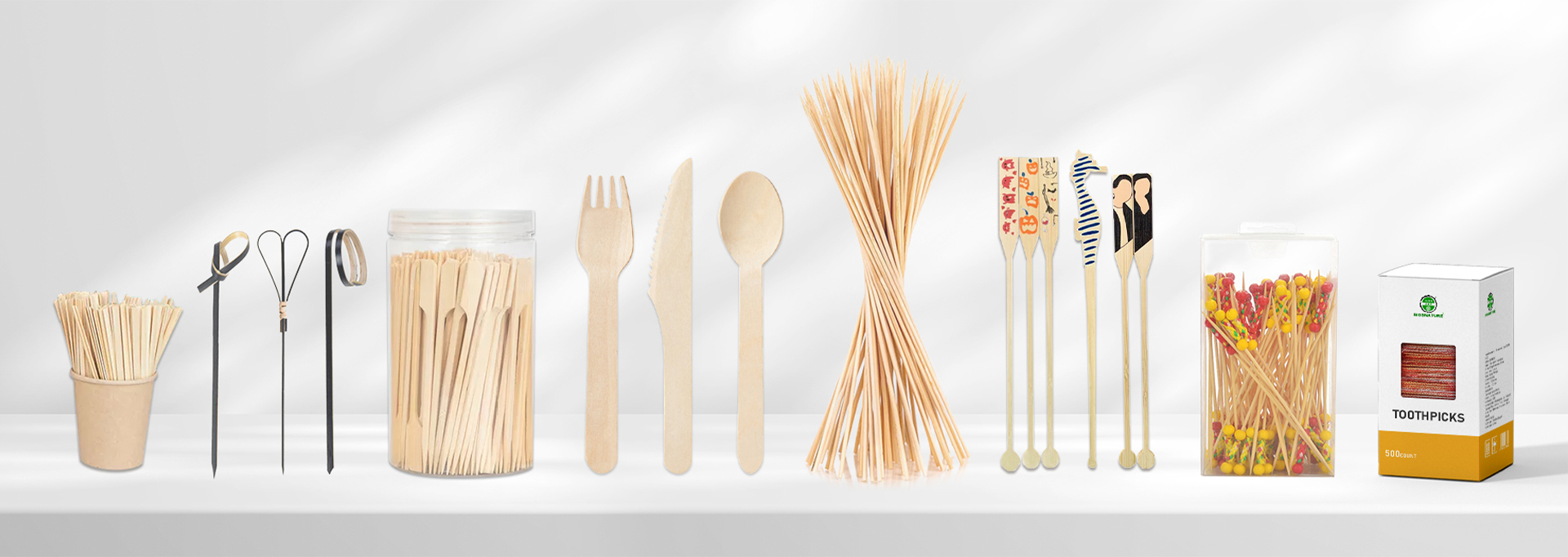
Hidden Risks of Custom Color-Tipped Toothpicks: Lessons From Real-World Banquet Contamination Incidents
A recent high-end coastal banquet encountered an embarrassing dining issue: strange colored particles kept appearing in freshly made sparkling cocktails, causing guest complaints and urgent on-site troubleshooting. After eliminating issues with ingredients, tableware, and beverages, the catering team finally confirmed the culprit: custom color-tipped toothpicks used for cocktail decoration.
This is far from an isolated case. In recent years, countless catering brands focused on refined table styling have faced similar setbacks. Many batches of cocktail garnish custom color-tipped toothpicks have been fully recalled from sales markets, due to excessive heavy metal migration from printed ink that fails to meet EU AP(2004)1 resolution requirements.
A common confusion among catering buyers is why regulators enforce such strict rules on tiny colored toothpick tips. Since the colored ink only covers a minimal end section with no direct food contact for most of the time, is strict migration control really necessary?
The core answer lies in structural defects of ordinary printed layers. The thin paint coating on toothpick surfaces cannot form a complete functional barrier. Condensed water on tableware, ethanol in drinks, and grease precipitated from food can penetrate tiny cracks in the paint layer over time.
This gradual penetration dissolves primary aromatic amines, UV photoinitiators, and soluble heavy metals in color paste, which then migrate into food and beverages invisibly. Such indirect contamination has triggered massive global product recalls in the past, pushing continuous upgrades to food contact ink regulations worldwide.
Real-world precedent: In 2005, Nestlé recalled baby formula across four European countries after photoinitiator ITX was detected migrating from packaging ink. In 2011, German authorities recalled frozen noodles with excessive benzophenone migration from printed packaging. These incidents explain why even indirect food contact scenarios require rigorous migration testing.
EU AP (2004) 1 vs. China GB 4806.14 vs. Switzerland SR 817.023.21 — A Side-by-Side Compliance Comparison
Global food contact ink regulations vary greatly in restricted substances, limit values, and test conditions. The below updated comparison table covers the latest 2026 standards, helping buyers quickly distinguish compliance requirements for different markets.
| Regulation Code | Key Controlled Substances | Official Limit Standards | Standard Test Conditions | Non-Compliance Consequences & Industry Pain Points |
|---|---|---|---|---|
| EU AP(2004)1 Resolution | Primary aromatic amines, soluble heavy metals, ink photoinitiators | Primary aromatic amine ≤0.01mg/kg | 24-hour immersion in 50% ethanol & olive oil mixed solution at 40℃ constant temperature | Full batch market recall for excessive indirect migration, even without direct food contact |
| Swiss SR 817.023.21 | All colorants, binding resin, ink additives | All raw materials must be listed in official Swiss List A/B | Long-term high-low temperature cycle & dry-wet alternating test | Nearly 90% of ordinary screen printing inks fail qualification, limiting compliant material options |
| China GB 4806.14 & GB 9685 (2026 Draft) | N-hexane evaporation residue, heavy metals, BPA, aluminum residue | Al ≤1mg/kg, BPA ≤0.05mg/kg, residue meets national threshold | 2-hour sealed n-hexane immersion at 60℃ constant temperature | Unqualified batches will be scrapped and prohibited from commercial circulation |
Custom Toothpick Ink Compliance by Application: Standard Rules for Bars, Buffets & Tea Shops
No single compliance standard fits all catering scenarios. Different business environments and food types create distinct migration risks for food-grade pigment custom toothpicks, so targeted material selection is essential to avoid compliance failures.
High-end cocktail bars prioritize EU AP(2004)1 compliance, as high alcohol content in beverages greatly accelerates ink dissolution and migration. Western buffet restaurants with fatty steak, cream desserts, and fried food require dual compliance with Chinese national standards and Swiss raw material certification. New-style tea shops feature humid indoor environments with frequent condensation, making n-hexane residue control the top priority for custom color paste selection.
4-Step Procurement Checklist: How to Verify Migration Test Reports for Custom Toothpicks
Most procurement compliance losses stem from neglecting on-site inspection while only focusing on cost and appearance. This four-step verification method helps buyers fully check custom color-tipped toothpicks with valid migration test reports without professional laboratory equipment.
- Document Verification: Reject simple MSDS material sheets which only display basic ingredient information. Always request complete third-party lab migration test reports with clear regulation code labeling to verify practical food-contact safety.
- On-Site Simulation Test: Wipe colored toothpick tips repeatedly with cotton swabs dipped in olive oil and 50% alcohol. Any color bleeding or transfer indicates unqualified curing quality, requiring full batch rejection.
- Process Parameter Confirmation: Confirm the pigment type (water-based, UV-curable, oil-based) and corresponding curing energy data with manufacturers. Reliable compliant suppliers can provide accurate technical parameters instantly.
- Batch Sample Storage: Reserve 3-5 toothpick samples for each shipment. Reserved samples support rapid re-inspection and traceability during market compliance audits, avoiding batch-level liability risks.
2-Minute DIY Alcohol & Oil Rub Test — Fast Compliance Check for Color-Tipped Toothpicks
Small and medium-sized catering buyers rarely have access to professional testing equipment. Fortunately, a simple cotton swab rubbing test can filter out over 80% of substandard custom color-tipped toothpicks.
Control the test temperature at around 25℃ to simulate regular catering indoor environments. Alcohol rubbing replicates long-term beverage contact corrosion, while olive oil rubbing simulates fatty food immersion. The entire inspection process takes only two minutes, delivering accurate and intuitive compliance results.
Full QC Protocols of Compliant Custom Toothpick Manufacturers: From Pigment Selection to Shipment
Trusted custom tableware manufacturers rely on standardized production processes rather than verbal compliance promises. Before mass-producing custom color-tipped toothpicks, formal factories conduct three sets of professional migration simulation tests covering real catering usage scenarios.
The standardized tests include: 24-hour 50% ethanol immersion matching EU AP(2004)1 test criteria, 24-hour olive oil soaking for fatty food scenario simulation, and 40℃ constant-temperature condensation exposure for humid kitchen environments. Any color paste batch with bleeding issues during testing will be discarded directly and never put into production.
Gorlando specializes in eco-friendly disposable tableware customization with authoritative industry certifications including LFGB, FDA 21 CFR, and FSC. For allcustom color-tipped toothpicks orders, regardless of order quantity, we provide complete third-party migration test certificates, fully eliminating post-purchase compliance risks for buyers.
Color-Tipped Toothpick Compliance FAQs for Professional Procurement Teams
Based on long-term custom service experience, we sorted out the four most frequently asked compliance questions from global catering procurement teams, covering small-batch customization, multi-scenario application, and material selection concerns.
Q1: Is migration testing unnecessary for toothpicks with only tiny colored tips?
A: No. Ink migration risks are not related to colored area size. Condensed moisture, alcohol, and grease can penetrate printed layers regardless of coverage. All custom colored toothpick batches require sampling inspection even with minimal colored tips.
Q2: Is Chinese national standard compliance sufficient for locally used toothpick batches?
A: Not entirely. Brand expansion, chain store opening, and cross-brand cooperation may expand product application scenarios at any time. Adopting EU AP(2004)1 compliant standards in advance prevents costly batch recalls and market removal risks.
Q3: What is the best pigment type for bar cocktail garnish toothpicks?
A: UV-curable color paste is the optimal choice, featuring high curing density and excellent alcohol corrosion resistance, perfectly adapted for high-alcohol bar scenarios. Water-based paste offers cost advantages for milk tea shops, while oil-based paste rarely passes international migration standards and is not recommended for commercial use.
Q4: Can small-batch custom toothpick orders obtain official compliance test reports?
A: Formal compliant manufacturers provide complete third-party certification documents for all colored custom orders, with no minimum order quantity restrictions, ensuring full compliance for commercial use and official inspections.
Common search inquiries from global buyers: Do custom colored toothpicks require FDA approval for US sales? Is migration testing mandatory for commercial colored garnish picks? Can small MOQ custom orders get full compliance certificates? All answers are covered in the above regulation comparison and FAQ sections. For supplementary documents and professional customization consultation, contact Gorlando’s dedicated compliance team anytime.
发表回复