
 Русский
 Português
 Español
 Français
 Deutsch
 العربية
 简体中文
简体中文 日本語
日本語 한국어
한국어
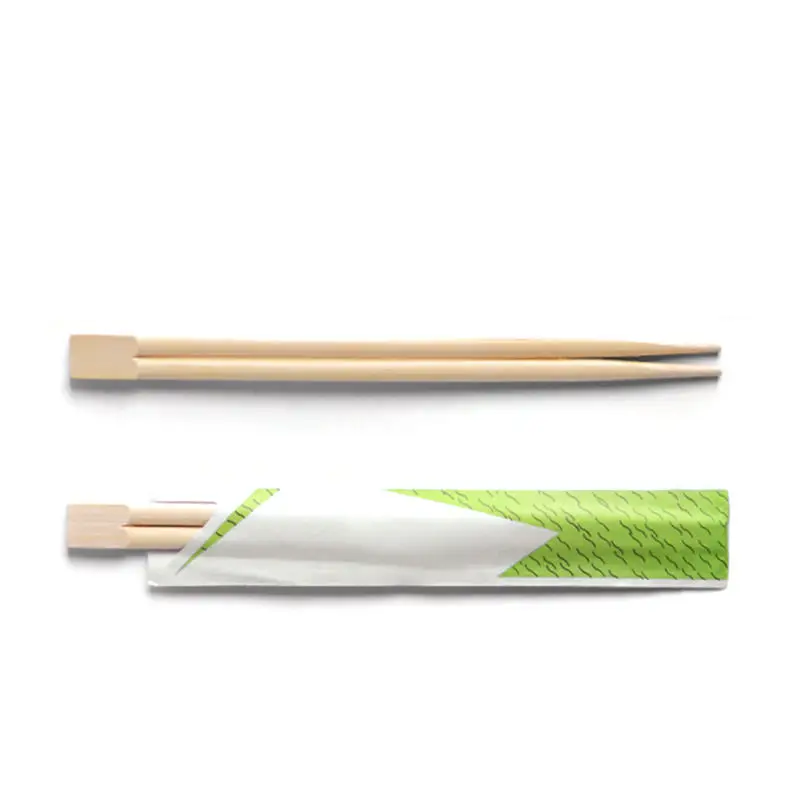
1. Tiny twinned chopsticks: A hidden risk to customer dining experience
Pulling apart twinned chopsticks is a common scene in catering venues, yet many diners have been pricked by sharp chopstick splinters during this simple action. Such unpleasant issues mostly stem from inaccurate cutting of the V-groove in production. Catering operators spare no effort to improve dishes and services, but trivial tableware problems often spoil customer satisfaction and lead to negative comments. As a professional manufacturer focusing on custom disposable tableware, Gorlando has served various catering scenarios for years. We clearly know that the processing details of the V-groove directly determine the using performance of twinned chopsticks, and it is also an easily overlooked factor affecting store reputation.
Restaurants with heavy foot traffic consume a large number of tableware every day. Diners rarely complain about ordinary chopsticks, but a painful scratch caused by splinters will completely ruin their dining mood. Accumulated negative experiences will turn into public reviews and gradually damage the brand reputation built over time. Many operators realize the importance of tableware quality, but fail to locate the root cause. In fact, the depth and shape of the V-groove hold the key to solving this problem.
2. V-groove processing: A tricky dilemma behind a simple procedure
2.1 Multiple problems caused by improper V-groove depth
Bamboo and wood come with natural fiber textures, which makes cutting the central V-groove of twinned chopsticks one of the most challenging procedures in tableware production. If the V-groove is cut too deep, the connecting part of paired chopsticks will become extremely fragile. During packaging, transportation or storage on store shelves, the connected structure will break apart accidentally. Scattered chopsticks not only increase tidying work, but also cause unnecessary material loss.
Will cutting the groove shallower solve all troubles? The answer is no. An overly shallow V-groove leaves excessive base material at the joint. When diners pull the chopsticks apart, force cannot concentrate on the central line. Bamboo or wood fibers will split along the texture and cause uneven tearing, producing hard and sharp chopstick splinters. Besides, shallow grooves will raise the chopstick separation torque. Elderly people and children have to struggle to separate the chopsticks, which also ruins the smooth dining experience.
2.2 How material features affect V-groove standards
Bamboo and wood from different origins and categories vary greatly in fiber density and flexibility, so a single V-groove standard cannot fit all materials. Raw materials with dense fibers tend to form uneven fracture surfaces even with standard groove depth. Materials with loose fibers are more likely to break spontaneously if the groove is slightly deepened. When accepting custom orders, Gorlando first checks the characteristics of raw materials and adjusts cutting parameters accordingly, to make the process standards suitable for different twinned chopsticks.
3. Golden process parameters for mass production of twinned chopsticks
After tens of thousands of practical tests, the industry has summed up a set of mature process standards for mainstream twinned chopsticks, which balances structural stability and easy separation. All mass-produced products of Gorlando strictly follow these standards, and we can flexibly adjust parameters according to customers’ customized sizes and materials to avoid burrs and breakages fundamentally.
| Parameter Name | Standard Range | Practical Function | Relevant Process Points |
|---|---|---|---|
| Remaining wall thickness ratio at joint | 35%–40% of total thickness | Keep fracture aligned with central line and prevent longitudinal tearing | Monitor cutting depth in real time to control batch deviation |
| R angle at V-groove bottom | 0.1mm–0.2mm tiny radian | Gather tensile stress for smooth fracture surface | Polish cutting tools regularly to maintain standard blade shape |
| Chopstick separation torque | 0.4–0.6 N·m | Easy to separate with one hand for people of all ages | Adjust cutting depth slightly according to raw material hardness |
| Compression resistance of finished products | No spontaneous breakage under normal storage load | Ensure intact goods during logistics and storage | Keep minimum V-groove depth at 35% of total thickness for stable structure |
3.1 Cutting tool condition determines V-groove forming quality
Reliable cutting process relies on high-performance cutting tools. Tungsten carbide precision cutters are widely used to process V-grooves thanks to high hardness and wear resistance. However, the blade will gradually become blunt after long-time continuous operation. Once tools wear out, the R angle at the V-groove bottom will expand constantly. The concentrated tensile stress will disperse, resulting in uneven tearing and massive chopstick splinters, even if the groove depth meets the standard.
Formal production workshops set regular schedules for tool inspection, grinding and replacement. The production team of Gorlando checks tool status every day and maintains equipment timely. We ensure uniform depth and shape of the V-groove for every batch of twinned chopsticks.
4. On-site inspection checklist for bulk purchase
Professional testing equipment is not required for incoming goods inspection. You can quickly check the overall quality of twinned chopsticks with simple field tests. The practical steps below are suitable for every delivery acceptance:
- Stratified sampling: Pick no less than 60 pairs of chopsticks from different packages and layers of cargo boxes to cover the whole batch and avoid partial quality defects.
- Visual inspection: Check the overall trend of the V-groove. The depth and width of the groove must be uniform without local dents or bulges.
- Separation test: Split all sampled chopsticks manually and check the twinned chopstick fracture flatness one by one, count products with splinters and diagonal tearing.
- Compression simulation: Stack and press the samples for half an hour, check for spontaneous breakage to verify the structural stability of the V-groove.
- Hand feel test: Evaluate the overall chopstick separation torque. If most chopsticks are hard to split, the groove depth is insufficient and the process fails to meet standards.
5. Indirect impact of storage environment on twinned chopsticks
Many buyers overlook the influence of storage conditions. Bamboo and wood twinned chopsticks are hygroscopic. In high-humidity environments, raw materials will absorb moisture and expand slightly, changing the physical structure of joints. Even qualified V-grooves will face fluctuating chopstick separation torque and higher risk of fiber tearing due to material deformation.
On the contrary, extremely dry air will reduce the toughness of bamboo, leading to brittle fracture and tiny burrs during separation. Considering this feature, Gorlando marks suitable temperature and humidity range on product packages to guide customers on daily storage and extend the shelf life of finished products.
6. Frequently Asked Questions
Q1: Why do some twinned chopsticks split smoothly while others have obvious splinters in the same batch?
A: This kind of individual difference is mainly caused by inconsistent V-groove depth during production or partial wear of cutting tools, which leads to abnormal R angle at the groove bottom. Dispersed force causes uneven tearing and finally forms chopstick splinters. Standard production lines calibrate cutting equipment in real time to reduce such problems.
Q2: Do we need to reset V-groove parameters for custom-sized twinned chopsticks?
A: Yes. Twinned chopsticks with different lengths, thicknesses and weights have completely different stress structures, so the standards for remaining wall thickness and chopstick separation torque need recalculation. Gorlando supports full-spec customization and designs exclusive V-groove processing solutions according to customer demands.
Q3: Why do large quantities of twinned chopsticks break spontaneously after being stored in warehouse for a period of time?
A: The core reason is that the V-groove is cut too deep, which weakens the structural strength of joints. Combined with stacking pressure and temperature & humidity changes during storage, large-scale breakage will occur. Please focus on checking groove depth during acceptance.
Q4: Apart from V-groove processing, what else causes burrs on twinned chopsticks?
A: Damaged surface fibers of raw materials and incomplete surface polishing can also produce tiny burrs. But the long and sharp splinters appearing when splitting are almost directly related to the precision of V-groove processing.
Small as tableware is, it is an indispensable part of customer service experience. Strict control over V-groove processing quality can eliminate negative feedback caused by twinned chopsticks from the source. Choosing a partner who focuses on craftsmanship and details will make every tableware match the service standard of catering venues.
发表回复