
 Русский
 Português
 Español
 Français
 Deutsch
 العربية
 简体中文
简体中文 日本語
日本語 한국어
한국어

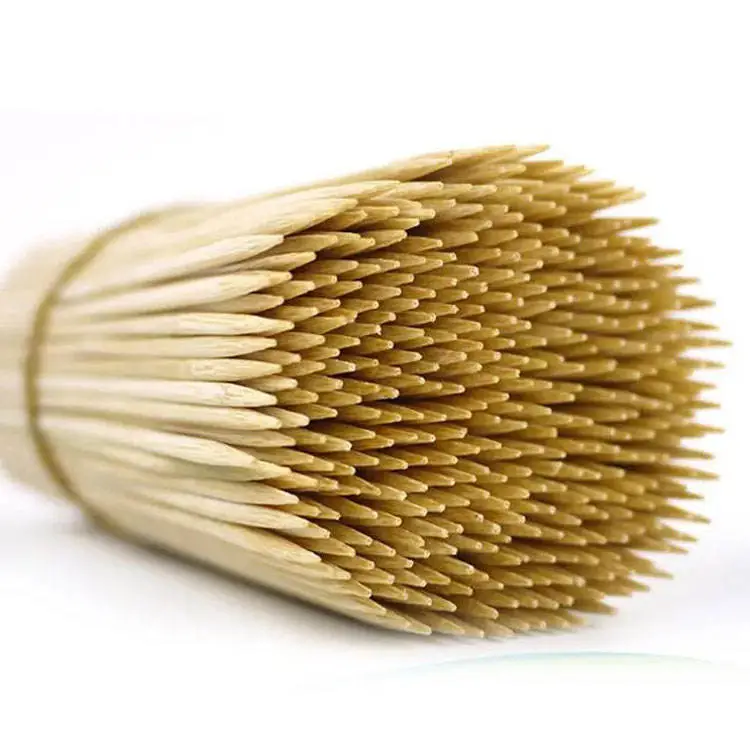
Over the past two months, our procurement partners have reached out repeatedly with urgent troubles: full 20GP containers loaded with bamboo skewers got detention notices issued by Australia’s Department of Agriculture, Fisheries and Forestry right after port arrival. Without valid BICON pre-registration, consignments face compulsory destruction or costly return per the updated Biosecurity Act 2015, with all financial losses falling entirely on local importers. Many specialists preparing Australian pre-document preparation for disposable catering bamboo skewer BICON filing keep running into compliance pitfalls, confused about formal specifications for pre-import quarantine certification application of bamboo goods for Australian entry. Here lies the core crux: classified as high-risk plant-derived commodities under Australian rules, all bamboo skewers demand prior clearance against Australian BICON import conditions and official biosecurity import permits; missing this mandatory step triggers mandatory cargo destruction clauses written in Biosecurity Act 2015.
Why Are Bamboo Skewers Tagged High-Risk Cargo by Australia? Pest Risks & Quarantine Logic Explained
1.1 Hidden Pests That Put Bamboo Under Strict Supervision
It is misleading to assume Australia imposes blanket bans on all bamboo imports. Australian quarantine frameworks are built to block cross-border proliferation of invasive pests, which easily hide inside tiny fiber crevices and bamboo nodes. Quarantine authorities mainly monitor two major pest categories:
- Wood-boring pests: longhorn beetle larvae and adult powderpost beetles, capable of surviving months inside seasoned dried bamboo
- Dormant eggs: bamboo pyralid ova and bamboo weevil pupae, impossible to fully eliminate via manual visual screening These invisible biological hazards land bamboo skewers on Australia’s high-risk inventory, leading to immediate cargo seizure without approved BICON documentation.
1.2 Key Updates to Australia’s 2026 BICON Platform Rules
Early this year, Australian regulators tightened backend access permissions across the whole BICON database, permanently scrapping the former emergency channel for late supplementary document submission upon cargo arrival. Any missing paperwork or wrong commodity classification locks shipment quarantine instantly with no revision grace period, explaining the sharp surge of rejected cases for pre-BICON approval for Australian bamboo skewer import.
Two BICON Compliance Routes for Bamboo Skewer: Fumigation vs High-Temp Carbonization, Which Works Better?
Exporters aiming to satisfy BICON quarantine standards for Australian-bound bamboo skewers pick from two mainstream solutions: methyl bromide airtight fumigation or factory-based high-temperature drying and carbonization. The two options differ drastically in processing length, chemical residue risks and required certification, detailed in the table below.
| Processing Option | Detailed Operation | Hidden Downsides | Total Lead Time | Custom Support from Gorlando |
|---|---|---|---|---|
| Methyl Bromide Closed Fumigation | Full-container airtight fumigation before loading to kill pests and larvae | Chemical residues cling to porous bamboo skewers, leaving odd smells after cooking and triggering bulk return from local catering stores | 3~7 working days | Issue auxiliary fumigation certificates upon special request, not recommended as primary solution |
| In-house High-Temp Carbonization & Drying | Disinfect raw bamboo via staged high-temperature drying and carbonization on standardized production lines, obtain official pest elimination certification | Requires complete factory pest-control SOP files, hard for small-scale workshops to finish full paperwork | Synchronized with regular production cycle | Self-owned bamboo plantation and standardized workshops, compile complete production logs and quarantine documents for BICON submission in one package |
2.1 Step-by-Step BICON Product Lookup Instructions
Incorrect commodity search entries rank top among common BICON application failures. Follow these standardized steps to retrieve Australia’s official import regulations efficiently:
- Access the official BICON inquiry portal run by Australia’s agricultural department and switch to the plant commodity classification tab
- Skip the commercial alias “Bamboo skewers” and input botanical scientific name Phyllostachys within the species search box
- Select finished catering-use bamboo goods and download the full official import regulatory files
- Sort out all required application documents in accordance with listed official terms
2.2 Practical Merits of Residue-Free High-Temperature Treatment
Is chemical fumigation the most cost-effective workaround? Industry players servicing local catering chains know lingering chemical odors ruin end-product sales entirely. With long-running expertise crafting disposable bamboo tableware, Gorlando archives full temperature logs and inspection slips covering raw bamboo harvesting, air drying and finished-product carbonization. Our production lines maintain steady heat above 115℃ for continuous 6-hour drying cycles; such thermal standards exceed Australia’s official pest elimination thresholds targeting longhorn and powderpost beetles. All relevant heat treatment certificate for bamboo skewer will be handed over alongside shipments, helping importers avoid unnecessary fumigation entirely and streamline BICON document compilation.
Who Bears BICON Application Liability? Liability Breakdown Across FOB/CIF/DDP Incoterms
Liability Division Under Three Common Trade Terms
- FOB: Local importer takes full legal charge of BICON system registration; manufacturers supply raw material, production and quarantine certifications on demand
- CIF: Suppliers cover ocean shipment arrangements while local buyers retain exclusive eligibility for BICON registration
- DDP: Suppliers manage full delivery and customs clearance, yet Australian-based importers stay as legal BICON registrants and complete local account setup Simply put, no matter which trade clause is signed, only locally licensed Australian importers qualify as legal BICON applicants; manufacturers solely provide supporting quarantine paperwork with no eligibility to replace applicants. Certain importers assign full registration work to manufacturers for convenience, yet such applications nearly always get rejected for invalid applicant qualification.
Overlooked Causes of BICON Rejection: Raw Material Origin Certificates & In-House Pest-Control SOP
Australian quarantine inspectors randomly audit raw harvest origin paperwork during routine port checks in most scenarios. Gorlando prepares supplementary plantation harvest slips and batch tracking records besides core certification to minimize document-related rejection risks for partnering importers.
Additional frequent rejection triggers include labeling goods as bamboo skewer without attaching scientific name Phyllostachys, mismatched cargo descriptions between commercial invoices and BICON forms, or fumigation certificates missing exact treatment temperature and duration details. Single minor errors barely affect clearance, yet overlapping flaws push up Australian quarantine spot check rate sharply. Parties confused about filing details can access Gorlando’s sorted Australian bamboo import compliance document pack to cross-check missing paperwork.
FAQ: Frequently Asked Questions on Australian Bamboo Skewer BICON Filing
Q1: Is pre-submission of pre-BICON approval for Australian bamboo skewer import mandatory for small courier sample parcels?
A1: Small express shipments fall under identical Australian biosecurity oversight; pre-filing stays required for nearly all samples or unregistered goods face customs seizure. All bulk and sample orders bound for Australia should reserve a minimum of 10 working days for formal BICON pre-assessment ahead of shipment.
Q2: Can manufacturers adjust production procedures for unfinished bulk bamboo skewer to meet certification requirements?
A2: Process revision and supplementary high-temperature disinfection certification remain viable before full container loading with technical backing from Gorlando; post-packing adjustments prove extremely impractical.
Q3: Does Gorlando customize certification files to match official standards for pre-import quarantine certification application of bamboo goods for Australian entry?
A3: Leveraging years of global catering supply experience, we tailor full paperwork complying with Australian quarantine norms, covering complete Australian biosecurity import conditions for bamboo goods documentation sets.
发表回复