
 Русский
 Português
 Español
 Français
 Deutsch
 العربية
 简体中文
简体中文 日本語
日本語 한국어
한국어
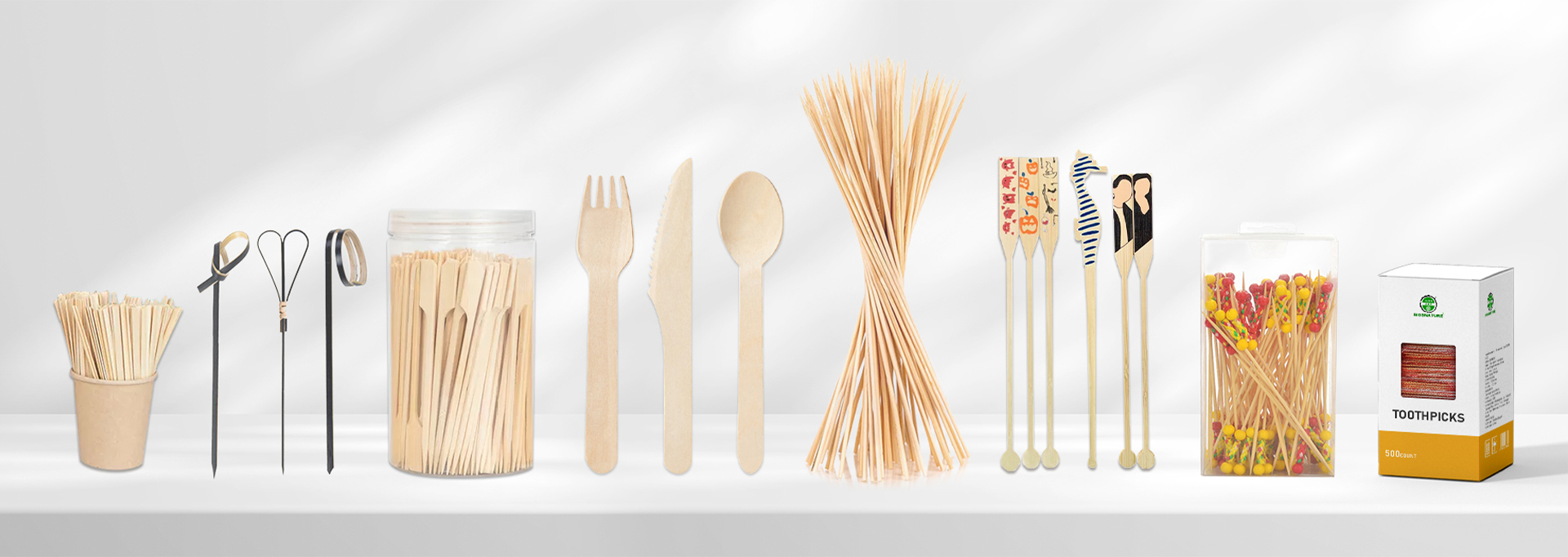
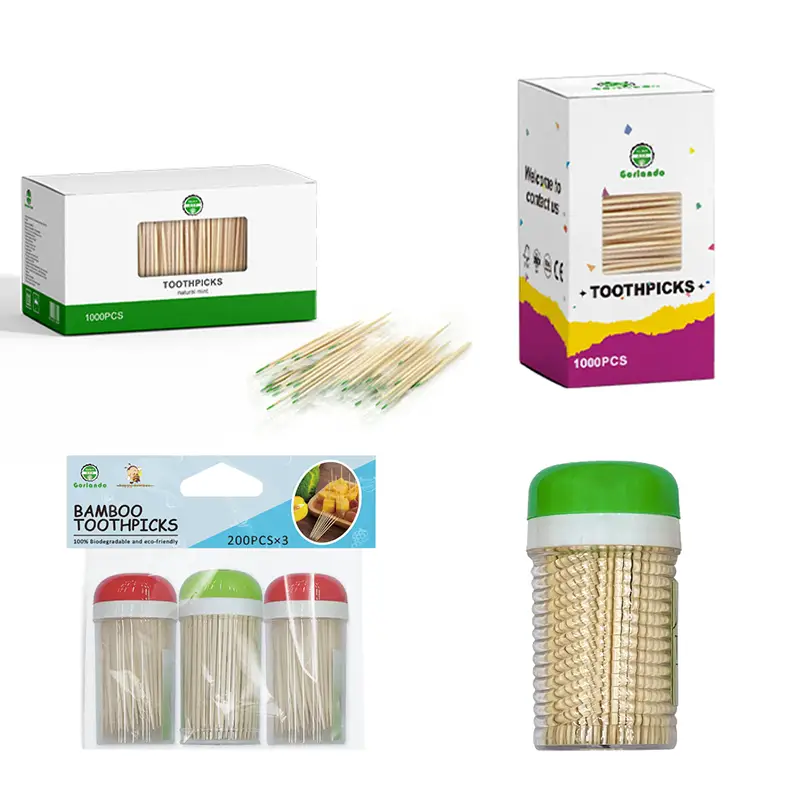
Many catering purchasers and store operators tend to regard toothpicks as low-cost consumables and overlook the commercial value behind packaging designs. In fact, the packaging design of commercial toothpicks is a core tool for matching store positioning, controlling operating costs and optimizing customer experience. Different custom toothpick packaging solutions correspond to distinct customer groups, profit models and supply chain systems, which are also subtle keys to differentiated store operation.
Single-Pack Toothpicks: Build High-End Competitiveness with Ultimate Hygiene
Single-pack toothpicks are standard products for high-end service scenarios, precisely suitable for high-end hotels, airline lounges, medical institutions, customized business meals and other high-quality service scenarios. In these scenarios, customers are extremely sensitive to sanitary details, and the untouched, unopened product form can completely eliminate customers’ hygiene concerns, which is the core reason why high-end scenarios accept higher pricing.
Actually, the core advantage of this type of packaging is far more than hygiene. Gorlando adopts a fully automatic sealing process to produce single-pack packaging, ensuring tight sealing, smooth tearing without residues, and eliminating secondary pollution during transportation, storage and access. Meanwhile, full-custom printing is supported, making every single toothpick a hidden brand display window, deepening customers’ brand impression through subtle details.
From the perspective of supply chain, single-pack toothpicks require sophisticated production techniques, with high standards for equipment precision, sample making and material compatibility. They are more suitable for long-term stable procurement that pursues brand texture, rather than short-term bulk orders.
Twin-Pack Toothpicks: The Optimal Cost-Performance Solution for Mid-Tier Catering
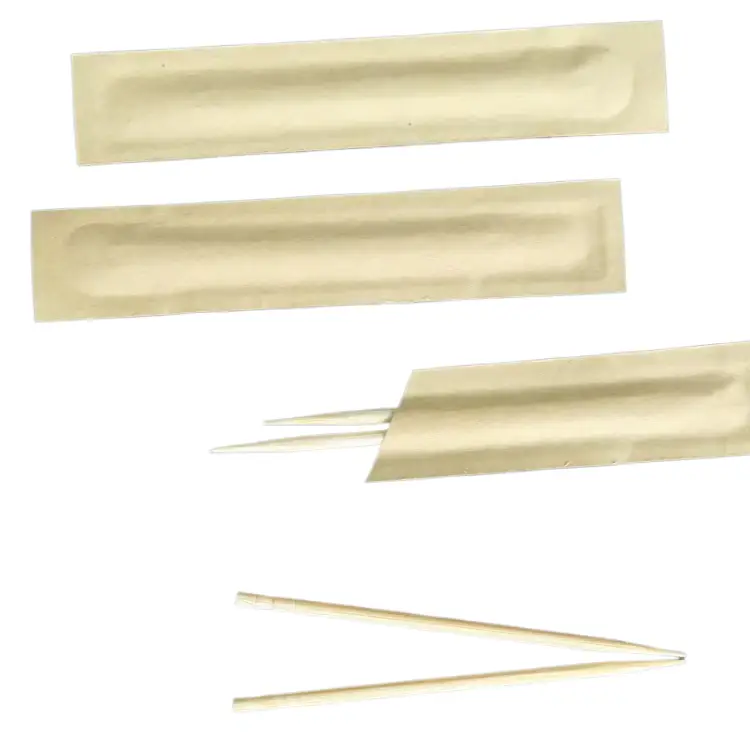
Twin-pack toothpicks accurately target mid-tier chain restaurants, boutique coffee shops, light food stores and other mainstream scenarios, perfectly fitting the daily consumption habits of dining in pairs or preparing spares. Compared with single-pack products, they greatly reduce the cost per piece while retaining the hygienic advantages of independent packaging, balancing the two core demands of experience and cost.
In fact, the size of this packaging has been adjusted and optimized through multiple process tests, which can perfectly adapt to mainstream tableware sets and trays on the market, and can be flexibly matched with napkins, disposable cutlery and wet wipes to make store serving more neat and exquisite. Most mid-tier catering brands prefer this packaging, as it will not reduce store service texture and can effectively control long-term procurement costs.
On the production side, twin-pack production lines have high compatibility and can share equipment with a variety of disposable bamboo tableware production lines. The fast line switching speed enables flexible adaptation to diverse procurement demands such as mixed batch orders and small-batch supplementary orders.
Bulk/Boxed Toothpicks: Efficient Operation Solution for High-Circulation Scenarios
Bulk boxed toothpicks are the preferred choice for fast food restaurants, enterprise canteens, offline retail stores and community catering stores, with core advantages of high circulation efficiency, low cost investment and convenient replenishment. These scenarios feature large passenger flow and fast consumable consumption, so stores prioritize restocking efficiency and overall operating cost control.
Many people think that bulk toothpicks always deliver a poor user experience. Is this really the case? In fact, the experience shortcomings of bulk products can be completely made up with supporting storage boxes. Equipped with special moisture-proof sealed dispensers, it can solve the problems of moisture and dust accumulation of bulk products, and realize one-handed quick access to greatly improve store serving efficiency. For retail bulk toothpicks, most are designed with transparent windows to intuitively display bamboo quality and reserve sufficient area for brand printing, enhancing shelf display competitiveness.
In terms of production and logistics, bulk toothpicks have no redundant packaging consumables, with higher container loading density and far greater loading capacity than packaged products, showing prominent advantages in bulk shipment and being extremely suitable for regular large-batch procurement.
Full Parameter Comparison of Three Types of Toothpick Packaging
To make procurement decisions clearer and more intuitive, we have sorted out full-dimensional parameters covering market positioning, cost, logistics, production and quality inspection, forming a complete comparison table for store operation, supply chain and quality control reference.
| Toothpick Packaging Type | Single Independent Pack | Twin Pack | Bulk / Boxed Pack |
|---|---|---|---|
| Core Target Market | High-end hotels, aviation, medical care, customized business catering | Chain restaurants, coffee shops, mid-tier casual catering | Fast food, canteens, retail stores, community catering shops |
| Cost Guide (Per Piece) | High (complex craftsmanship, high packaging consumable cost) | Medium (balanced cost, outstanding cost performance) | Low (no redundant packaging, ultra-low bulk cost) |
| Loading Efficiency (Per Container) | Low (large packaging volume, limited container loading capacity) | Medium (moderate volume, compatible with conventional logistics) | Extremely High (no redundant packaging, maximum space utilization) |
| Customer Hygiene Perception | Extremely High (zero-contact use, no pollution risk) | High (sealed spare pack, clean and hygienic) | Medium-Low (depends entirely on dispenser box design) |
| Brand Display Potential | Strong (single-pack works as mini advertising spot with high exposure) | Medium (two pieces share one package with regular brand display) | Weak-Medium (no single product exposure, brand display relies on outer box) |
| Factory Production Threshold | High (large equipment investment, strict sample standards, high precision requirements) | Medium (high production line compatibility, fast model switching) | Low-Medium (relying on strong mass production capacity and stable output) |
| Key Procurement Inspection Items | Sealing tightness, tearing smoothness, food-grade material compliance | Adhesion prevention of two pieces, single piece taking smoothness, packaging fitness | Box moisture resistance, access port design, transportation compression resistance |
Procurement Decision-Making FAQ
Based on years of customized production and supply experience, we have sorted out the core procurement questions of catering brands and stores, providing practical references from three dimensions: scenario adaptation, cost control and risk avoidance.
Q1: What kind of custom toothpick packaging is suitable for a newly opened boutique coffee shop?
You can make judgments according to customer stay mode and unit price. If your store mainly serves dine-in customers with long stay time and high experience demands, twin-pack toothpicks deliver the best cost performance, ensuring hygienic texture without excessive operating costs. If takeaway and quick-service orders dominate, the extreme hygiene sense brought by single-pack toothpicks can effectively enhance customer favorability and support higher brand premium.
Q2: Will using bulk commercial toothpicks lower the overall style of a store?
It will not. The key factor affecting store texture is not bulk toothpicks themselves, but the storage containers. In scenarios such as fast food and community catering, matching high-quality bulk toothpicks with premium acrylic or metal dispensers and neat placement can perfectly fit the store style without a cheap look. Scenario adaptation and storage design matter far more than packaging forms.
Q3: What is the most easily overlooked cost trap when purchasing bulk toothpicks?
Most purchasers only compare the unit price per toothpick but ignore the loss cost of packaging boxes. Some low-cost bulk toothpick boxes are made of thin materials, which are prone to deformation and damage during long-distance transportation and stacking, resulting in scrapped whole boxes and implicit losses. After calculating the comprehensive loss cost, the actual investment of low-cost unbranded products is often higher than that of branded products with stable supply and strict quality control.
Conclusion
There is no absolute good or bad for toothpick packaging, only suitability. Packaging designs that fit store scenarios and customer needs can turn subtle service details into store advantages; blindly following trends will only cause unnecessary implicit operating costs. At Gorlando, we never simply recommend the most expensive products. Our team will match the most suitable packaging form for you based on your service scenarios, customer unit price and target customers’ hygiene expectations. If you are unsure about the optimal solution, you can send us your store service details for professional customized recommendations. With self-owned production bases, complete quality control systems and in-house design teams, we support full-category toothpick customized production to meet diverse demands of catering stores and procurement channels.
发表回复