
 Русский
 Português
 Español
 Français
 Deutsch
 العربية
 简体中文
简体中文 日本語
日本語 한국어
한국어
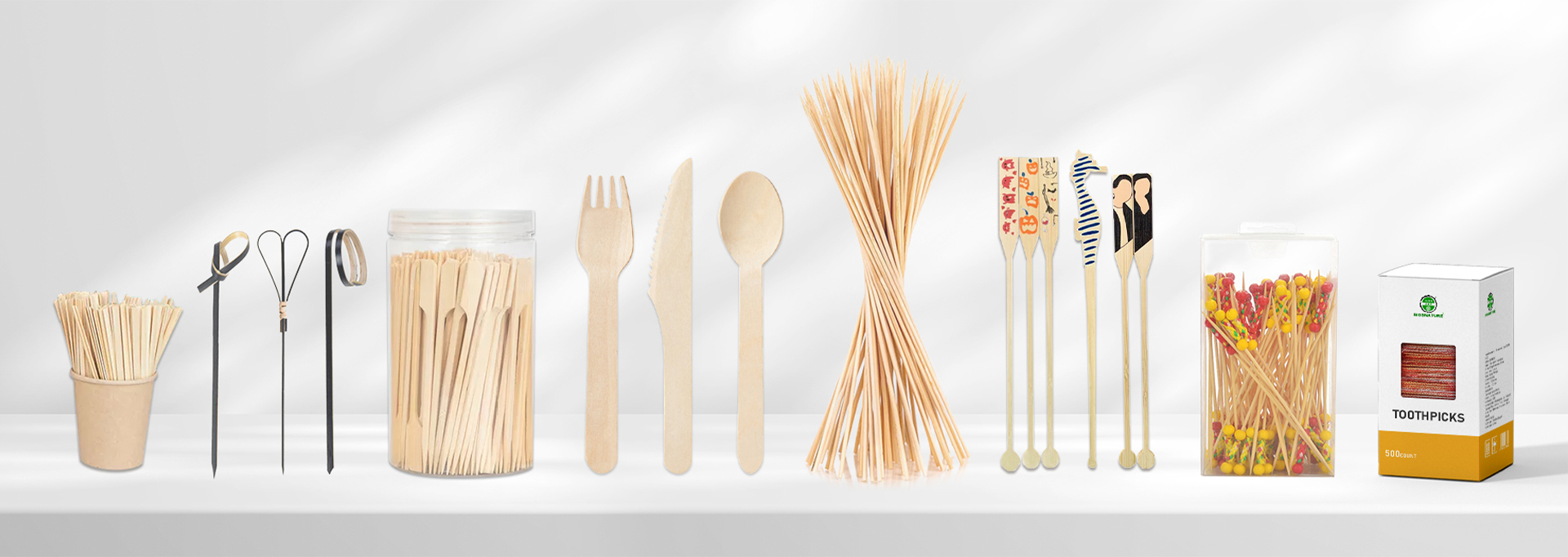
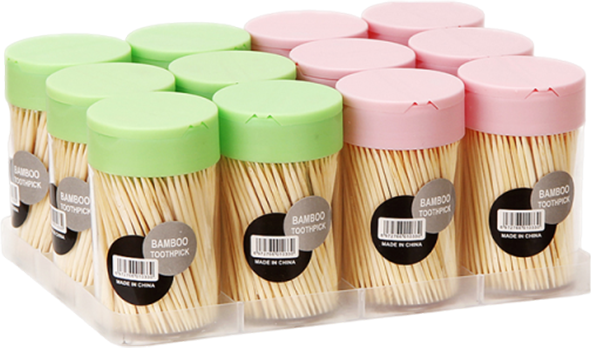
In my view, toothpicks, though small, are an often-overlooked yet crucial link in the green transformation of the catering industry. Traditional plastic film-packaged disposable toothpicks are facing multiple survival crises: plastic films are difficult to degrade and become an environmental burden after disposal; sharp toothpicks easily pierce the packaging during transportation, causing a loss rate of 3%-5%; unstable moisture content control can also lead to mold on toothpicks, wasting resources and affecting the user experience.
Frankly speaking, the green transformation of the toothpick supply chain has long been no longer a choice. At the policy level, the national “bamboo instead of plastic” special standard system has been fully implemented, forcing the industry to accelerate plastic removal; consumers’ attention to environmental protection continues to rise, and the habit of bringing their own environmentally friendly tableware and choosing plastic-free catering is gradually taking shape; compliance thresholds are also rising, with relevant regulations imposing increasingly strict restrictions on disposable plastic products, and toothpicks, as a high-frequency catering accessory, have naturally become a key focus of transformation.
Scenario-Based Solutions: Three Major Transformation Directions to Precisely Solve Problems
Direction 1: Intelligent Moisture-Proof Packaging to Solve Loss and Mold Problems
The core pain point of traditional plastic packaging lies in “non-environmentally friendly and impractical”. The technical logic of intelligent moisture-proof packaging is to replace plastic with bamboo fiber plant-based materials, then combine nano-coating to endow toothpicks with water and oil resistance, and control the moisture content in the golden range of 8%-12%, reducing mold from the root cause.
Referring to industry patent technology, Gorlando has installed custom foam blocks in bamboo stick packaging to completely solve the problem of piercing during transportation. A comparison of the two packaging types is clear at a glance:
| Comparison Item | Traditional Plastic Packaging | Intelligent Moisture-Proof Packaging |
|---|---|---|
| Transportation Loss Rate | 3%-5% | <1% |
| Warehouse Mold Rate | 8%-12% | <2% |
| Environmental Attribute | Non-Degradable | Biodegradable |
| Cost Increase | – | 15%-30% |
Although the initial cost has increased, the comprehensive loss reduction and brand image enhancement have already highlighted the cost performance for disposable toothpick customization businesses.
Direction 2: Edible Toothpicks to Unlock New Needs in High-End Scenarios
Edible toothpicks made from edible ingredients such as starch and rice flour are representatives of technological frontiers. After use, they can be eaten with the meal or quickly degraded in the natural environment, with no environmental residue at all.
Such toothpicks are mainly suitable for high-end scenarios: sashimi matching in high-end Japanese restaurants, creative plating in molecular gastronomy restaurants, supporting tableware in environmentally friendly theme hotels, and scenic spot catering with strict restrictions on disposable plastic. However, there are still challenges at present—the cost is 5-10 times that of ordinary bamboo toothpicks, and the shelf life is only 3-6 months. Large-scale popularization still needs to wait for technological iteration and cost reduction.
Direction 3: Zero-Plastic Certification to Open Up the Full Compliance Linkage
A truly green toothpick is not about a single environmentally friendly material, but about “zero plastic” across the entire supply chain. The zero-plastic certification promoted by Gorlando core includes three points: toothpick body without polymer coating, packaging replaced with kraft paper or PLA degradable film, and labels without lamination.
Among them, kraft paper packaging must meet the standards of 95% biodegradation rate and ≥92% disintegration degree within 180 days, and PLA degradable film complies with GB/T 19277.1 degradability testing requirements. Toothpicks that have obtained certification can not only meet the compliance needs of ESG reports of domestic catering enterprises but also cope with the access thresholds of relevant regulations.
Enterprise Implementation Action Plan: Phased Promotion and Steady Transformation
Near Term (Within 3 Months)
Gorlando has launched internal actions: comprehensively inventory the plastic use links in the toothpick supply chain, sort out packaging, coatings and labels one by one, identify 3 types of plastic components that can be prioritized for replacement, and clarify the replacement priority to lay a foundation for transformation.
Medium Term (Within 1 Year)
Screen 1-2 suppliers with green certification capabilities to establish cooperation, first launch the upgrading of intelligent moisture-proof packaging, complete the moisture content and coating optimization of bamboo toothpicks at the same time, ensure that products meet the GB 4806.7-2023 food contact standard, and test market feedback in a small range.
Long Term (2-3 Years Later)
Establish a complete green toothpick supply chain file, covering the entire link of raw material procurement, production technology, packaging materials and waste treatment. It is not only used for brand ESG disclosure but also provides a replicable reference plan for the green transformation of the industry.
High-Frequency FAQ: Answering Core Transformation Questions
Q1: Edible toothpicks sound high-end, but do people really use them?
A: Currently, it is indeed a niche market, mainly concentrated in high-end Japanese restaurants, molecular gastronomy restaurants and a few environmentally friendly theme hotels. After all, the cost is relatively high, and it is temporarily difficult for ordinary catering scenarios to popularize it. However, with the deepening of environmental protection concepts, it may become a new trend in the future. Catering enterprises can pay attention first and do not need to rush to purchase on a large scale.
Q2: Intelligent moisture-proof packaging is 15%-30% more expensive than ordinary packaging. Can the extra cost be recovered?
A: The unit packaging cost does increase, but the transportation loss is reduced from 3%-5% to less than 1%, and the warehouse mold rate is also greatly reduced. Overall, it can save a lot of costs. More importantly, environmentally friendly packaging can enhance the brand image, attract customers who pay attention to sustainable development, and have more value for the long-term development of the disposable toothpick customization business.
Q3: My toothpicks are made of bamboo, so aren’t they green products?
A: Bamboo itself is naturally degradable and is indeed a green raw material. However, if matched with plastic packaging, with polymer coating on the surface, or using non-food-grade ink printing, it cannot be regarded as “fully green”. A truly green supply chain requires control from the raw material to packaging, from production to use in all links, which is the key to the industry’s transformation.
发表回复