
 Русский
 Português
 Español
 Français
 Deutsch
 العربية
 简体中文
简体中文 日本語
日本語 한국어
한국어
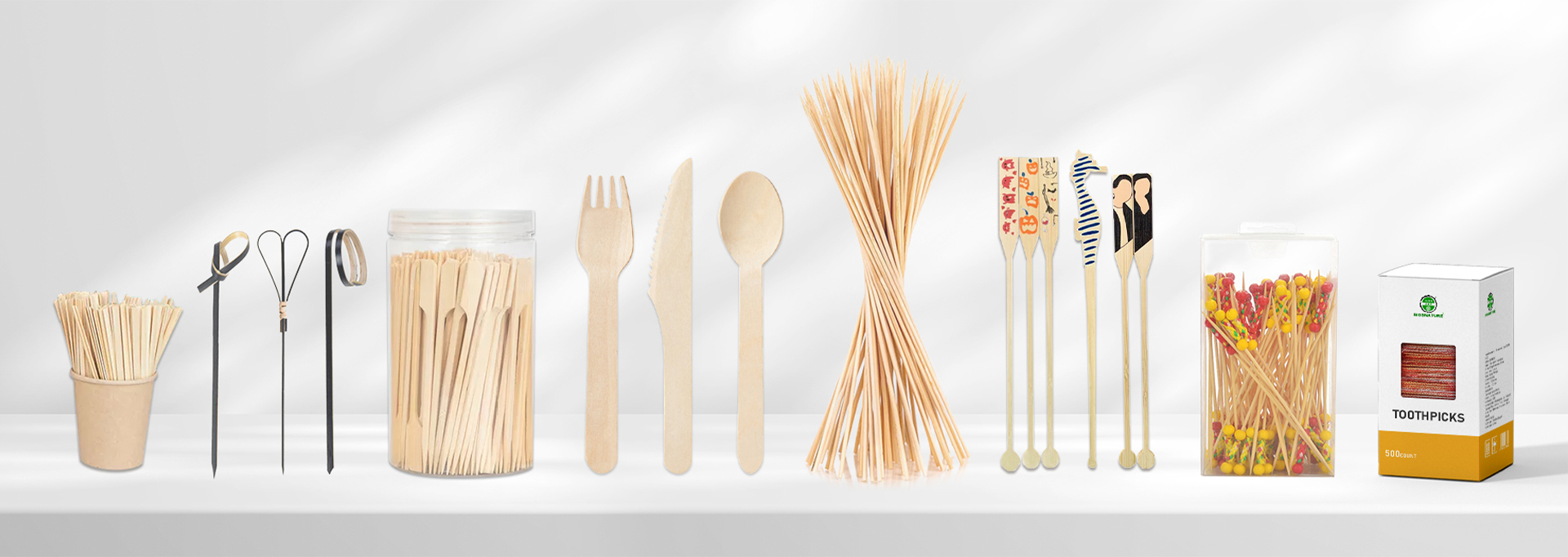
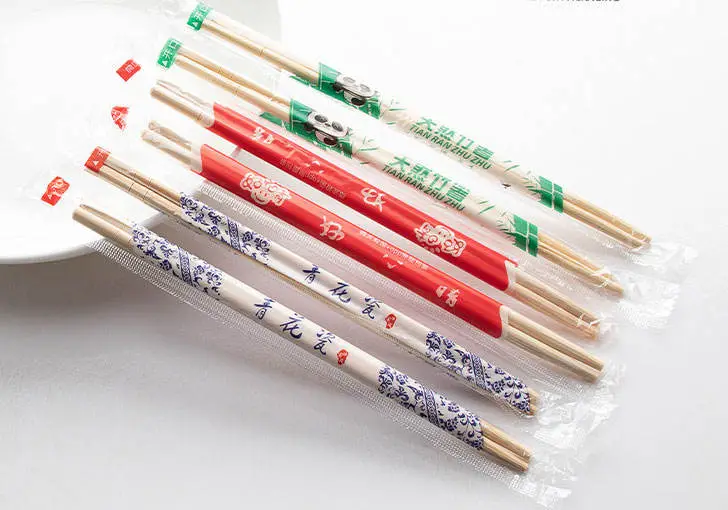
With the expansion of global catering chain operations and the takeaway economy, the demand for custom disposable tableware continues to rise. As the world’s major production base for disposable chopsticks, Chinese disposable chopstick factories have become key partners for overseas clients, thanks to their mature supply chains, flexible customization capabilities, and rapid adaptation to international environmental standards. Especially since 2025, the dual demand for “compliance + personalization” in overseas markets has brought new growth opportunities for domestic factories.
I. Core Market Opportunities: Interpretation of 2025 Latest Data
Many overseas clients wonder why they should cooperate with Chinese disposable chopstick factories. The following two sets of key data may provide answers:
Q1: What are the core competitive advantages of Chinese disposable chopstick factories in 2025?
A1: First, scale and efficiency advantages — China’s annual output of disposable chopsticks is expected to reach 15 billion pairs in 2025 (source: 2025 China Disposable Chopstick Industry Report), among which over 60% of factories with customization capabilities can achieve fast responses of “minimum order of 5,000 pairs and delivery in 7 days”. Second, environmental compliance advantages — currently, 85% of large-scale domestic factories have obtained FSC forest certification or EPDs environmental declarations, meeting access requirements of overseas markets such as the EU REACH Regulation and Japan’s Food Sanitation Law.
Q2: Which overseas markets have the fastest-growing customization demand?
A2: The Southeast Asian market (accounting for 29% of total exports) prefers longer and non-slip chopsticks, suitable for local catering scenarios such as hot pot and rice noodles. The European and American markets focus on “environmental protection + brand exposure”, with 60% of orders requiring the use of PLA biodegradable materials and printed brand logos. The Japanese and Korean markets have strict requirements for product cleanliness, requiring compliance with 12 indicators such as sulfur dioxide residue and heavy metal testing.
The table below shows the demand characteristics of major overseas markets for Chinese disposable chopstick factories in 2025:
| Overseas Market | Core Demand | Customization Ratio | Delivery Cycle Requirement |
|---|---|---|---|
| Southeast Asia | Longer, non-slip, cost-effective | 75% | 5-7 days |
| Europe & America | Biodegradable materials, logo customization | 90% | 10-12 days |
| Japan & Korea | Sulfur-free process, sterile packaging | 85% | 8-10 days |
II. Practical Preparation Checklist for Chinese Disposable Chopstick Factories
For Chinese disposable chopstick factories planning to expand overseas custom business, the following 3 preparations should be prioritized:
- Equipment and process adaptation: Basic equipment should include CNC cutting machines (to ensure dimensional accuracy) and microwave sterilization equipment (to meet sterility requirements). For high-end custom orders, it is recommended to add laser engraving machines (supporting logo and pattern customization). In terms of processes, sulfur-free bleaching and water-based paint surface treatment should be prioritized to avoid chemical residue issues.
- Raw material supply chain management: Bamboo has become the mainstream raw material in 2025 (accounting for 41%). It is recommended to cooperate with sustainable bamboo forest bases in Guangxi and Fujian to ensure raw material traceability. For European and American orders, PLA composite materials need to be stocked. Currently, the procurement cost of domestic PLA raw materials has decreased by 12% compared with 2024, which can enhance product competitiveness.
- Compliance document preparation: Handle FSC certification (essential for the EU market) and food contact material test reports (such as US FDA certification) in advance. Some markets also require carbon footprint accounting reports — 30% of European clients have taken carbon footprint as a procurement assessment indicator in 2025.
III. Overseas Market Expansion: 3 Practical Strategies
- Cooperate with catering chains and cross-border e-commerce: Establish long-term cooperation with overseas catering chains (such as Jollibee in Southeast Asia and Chipotle in Europe and America) to provide exclusive custom styles. At the same time, settle in platforms such as Amazon Business and Alibaba International Station, and launch “standardization + small-batch customization” packages for small and medium-sized clients (such as minimum order of 5,000 pairs, supporting color customization).
- Respond to changes in environmental policies: Pay close attention to overseas regulatory updates. For example, the new EU Ecodesign Directive for Tableware implemented in 2025 requires the degradation cycle of disposable chopsticks to be ≤ 180 days. Domestic factories can shorten the degradation cycle to 120 days by adding bamboo fiber reinforcing agents while maintaining product hardness.
- Strengthen the display of custom cases: Upload custom cases on official websites or social media, such as “curry non-slip chopsticks” designed for Southeast Asian clients (with 0.3mm texture on the surface) and “wheat straw mixed material chopsticks” customized for European and American organic restaurants, to reduce the cooperation concerns of overseas clients through practical cases.
发表回复