
 Русский
 Português
 Español
 Français
 Deutsch
 العربية
 简体中文
简体中文 日本語
日本語 한국어
한국어
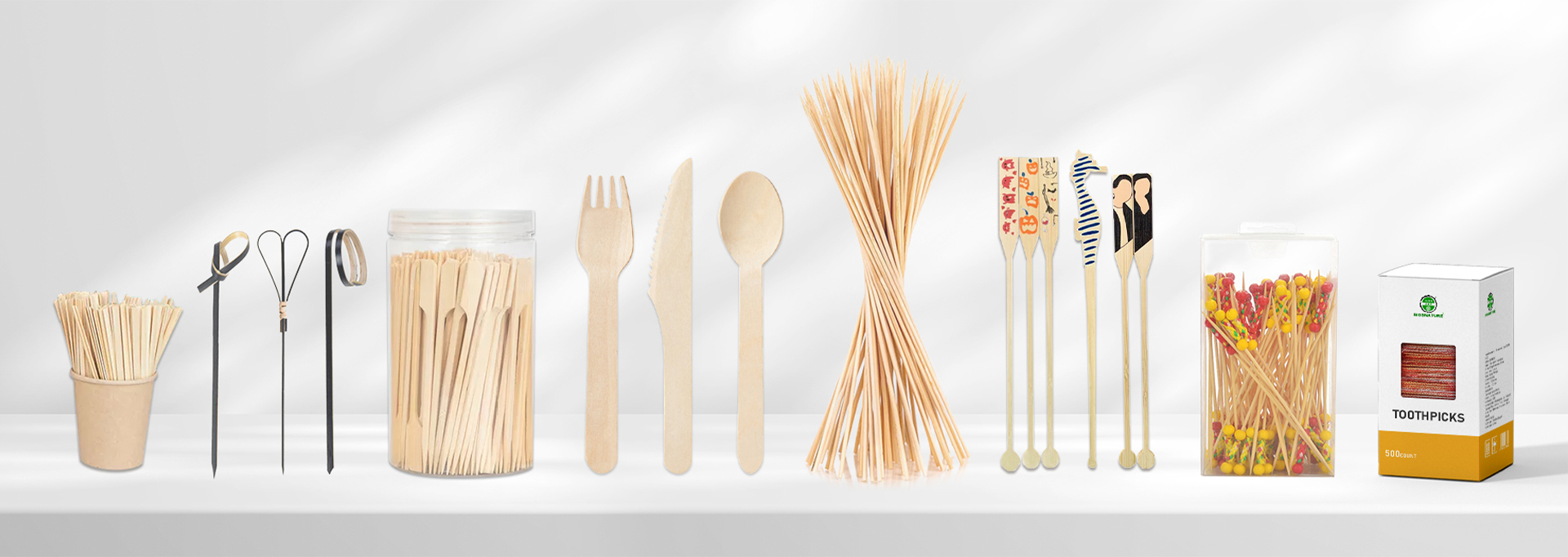
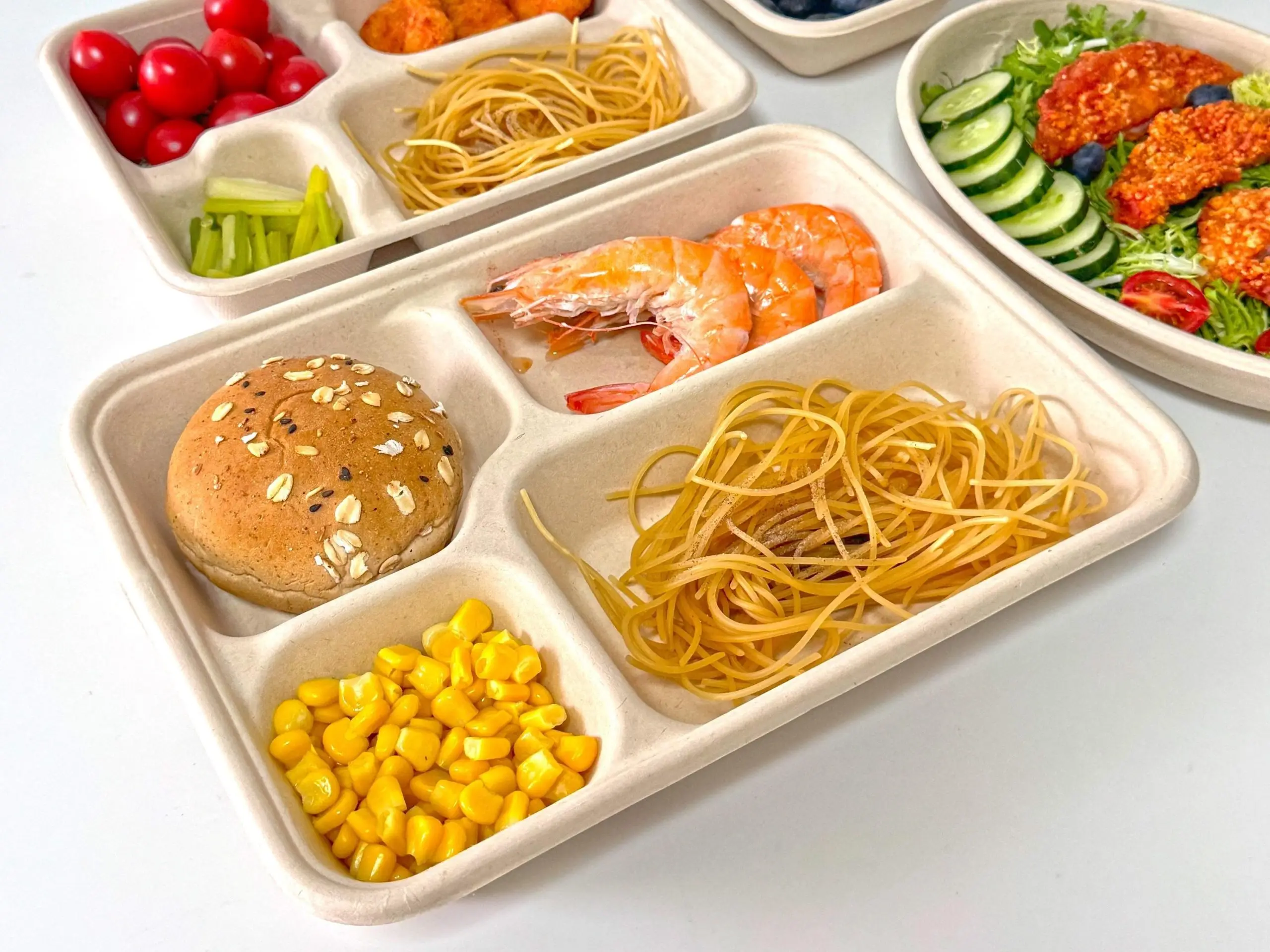
As environmental awareness gains momentum, degradable tableware has gradually replaced traditional plastic tableware, becoming a new trend in the catering industry. Among them, Corn Starch Tableware has won wide favor from businesses and consumers due to its natural raw materials and excellent degradation performance. Are you curious about the special properties of the raw materials of this seemingly ordinary tableware? Why can it achieve efficient degradation while ensuring usage strength?
I. Analysis of Core Raw Material Properties of Corn Starch Tableware
The core raw material of Corn Starch Tableware is a composite material of corn starch and degradable copolymers, with its most prominent feature being “controllable degradability”. In terms of raw material structure, this copolymer has a unique spatial design: when the degradation process starts, the entire material decomposes into small fragments with uniform geometric shapes, and the molecular weight is greatly reduced, making it easily absorbed by microorganisms in the natural environment.
Simply put, corn starch itself is a naturally renewable polar molecule with good biocompatibility, but it lacks sufficient strength when used alone; the composite degradable copolymer makes up for this shortcoming through special processes, allowing the raw material to retain the natural degradation property while meeting the usage requirements of tableware.
The following is a comparison of raw material properties between Corn Starch Tableware and traditional plastic tableware:
| Comparison Dimension | Corn Starch Tableware | Traditional Plastic Tableware |
|---|---|---|
| Raw Material Source | Corn starch (renewable plant resources) + degradable copolymers | Petroleum-based synthetic resins (non-renewable) |
| Polarity Characteristic | Mainly strongly polar, coordinated with modified copolymers | Non-polar molecules with stable structure |
| Degradation Performance | Can be completely decomposed into small molecules in natural environment, easily absorbed | Hard to degrade, remaining in natural environment for hundreds of years |
| Molecular Structure | Multiphase uniform particle body with loose spatial structure | Single continuous structure with stable chemical bonds |
II. Two Core Technical Difficulties in Raw Material Synthesis and Solutions
To perfectly integrate corn starch with copolymers and produce qualified tableware, two key technical difficulties need to be overcome:
- Insufficient intermolecular forceTraditional plastics rely on covalent bonds or ionic bonds to maintain strength, but the combination of corn starch and degradable materials is not such strong chemical bonds. The weak molecular gravity alone is far from sufficient. The solution is to optimize the process to increase the contact points between molecules at the micro level, maximize intermolecular forces, and allow the raw material to form a stable structure to ensure the load-bearing and shatter-resistant performance of the tableware.
- Compatibility issue between different materialsCorn starch is a strongly polar molecule, while some copolymers (such as modified PE) are non-polar molecules. They are naturally “incompatible” with weak intermolecular binding force. The key to solving this problem is to add auxiliary materials such as cross-linking agents, coupling agents, and surfactants, which act as “bridges” to closely combine polar and non-polar molecules. Meanwhile, initiators, auto-oxidants and other components are added in mass production to promote the material to undergo chain reactions under the chemical action of light, heat, oxygen and microorganisms, achieving deep degradation.
III. Common Questions About Corn Starch Tableware
Q1: Corn starch is prone to moisture absorption. Will the tableware deform easily?
A: No. Through copolymer modification and process treatment during production, the moisture resistance of the raw material has been improved. In daily use, as long as it is not soaked in water for a long time, it can maintain stable shape, fully meeting the needs of catering scenarios.
Q2: Are the degradation conditions of Corn Starch Tableware harsh?
A: No. In the natural environment (such as soil and compost conditions), microorganisms will gradually decompose its molecular structure. Even scattered small fragments can be absorbed by the environment in a short time without causing pollution. At present, high-quality products have passed international environmental standards such as ASTM D6400, with clear guarantees for degradation efficiency.
Q3: Will the copolymers in the raw materials affect environmental friendliness?
A: No. The copolymers used in Corn Starch Tableware are degradable themselves. They work synergistically with corn starch and will eventually decompose into harmless small molecular substances without leaving pollutants, truly achieving “full life cycle environmental protection”.
IV. Environmental Significance and Product Application
The raw materials of Corn Starch Tableware are derived from renewable crops such as corn, which does not require cutting down trees and can effectively protect forest resources. Its degradation property completely solves the problem of “white pollution” caused by traditional plastic tableware, providing a feasible solution for the green transformation of the catering industry.
Guangzhou Gorlando is a high-tech enterprise focusing on plant fiber production technology, integrating R&D, design, production, sales and distribution of food packaging supplies. The company’s main products include corn starch degradable lunch boxes, CPLA fully degradable lunch boxes, disposable milk tea cups and other environmentally friendly bio-based tableware. Relying on a mature R&D and production system, Gorlando maximizes the environmental value of Corn Starch Tableware while ensuring practicality, helping more businesses achieve sustainable operations.
发表回复