
 Русский
 Português
 Español
 Français
 Deutsch
 العربية
 简体中文
简体中文 日本語
日本語 한국어
한국어
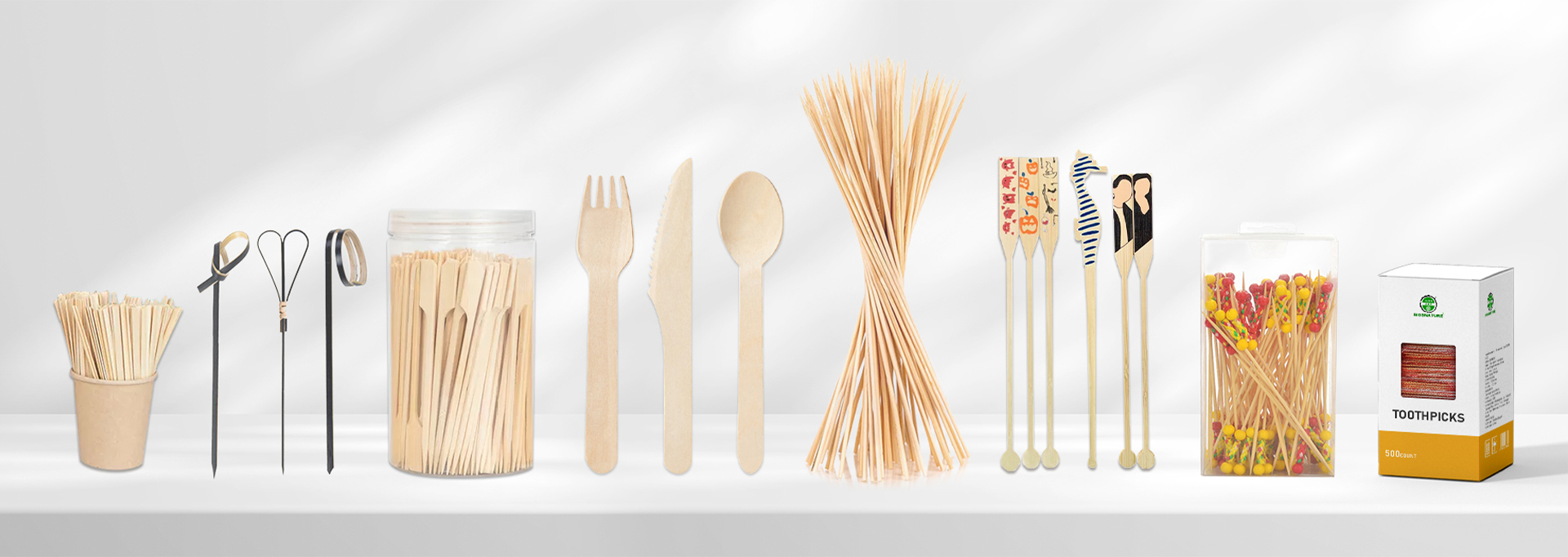
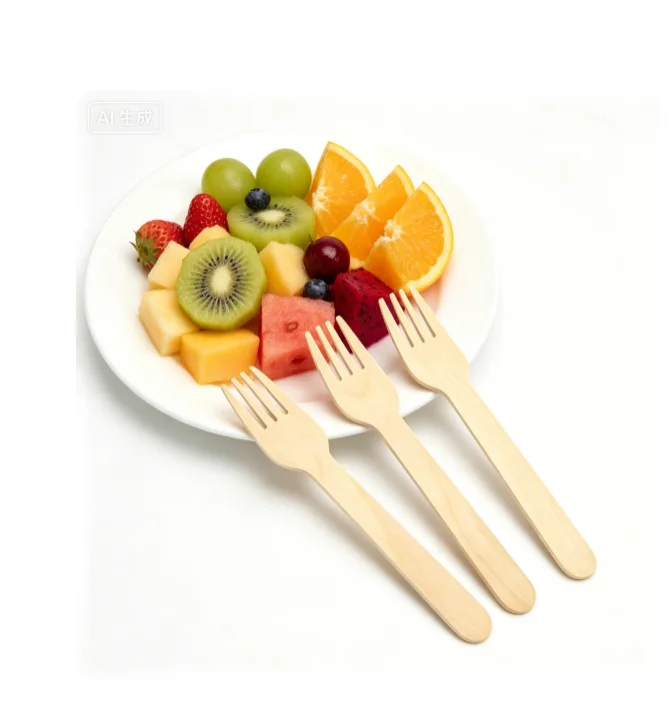
With global plastic restrictions tightening, switching to eco-friendly disposables is no longer optional—it is an industry standard. However, restaurant owners and procurement managers often encounter a common dilemma: Should you choose bamboo cutlery or wooden cutlery?
While both appear to be eco-friendly natural alternatives, their real-world performance varies significantly across strength, moisture resistance, cost, and dining experience. Making the wrong choice can compromise food presentation, anger customers with broken utensils, or unnecessarily inflate operational expenses.
Here is a practical breakdown across four key dimensions to help you make the most cost-effective and brand-aligned choice.
1. Strength and Durability: Flexibility vs. Hardness
A utensil’s quality is felt in the first bite.
- Bamboo Cutlery: Bamboo naturally possesses dense fibers and high flexibility. Products like the bamboo knife, bamboo fork, bamboo spoon, and bamboo spork resist snapping or splintering when handling tough meats or heavy salads. They also offer superior moisture resistance, maintaining their shape and structure in hot soups or oily sauces without softening.
- Wooden Cutlery: Standard wooden utensils offer good hardness, but their fiber elasticity is slightly inferior. The wooden knife, wooden fork, wooden spoon, and wooden spork are somewhat more prone to splitting along the grain under heavy pressure or prolonged exposure to liquids.
For hearty steaks, hot soups, or dense meals, bamboo cutlery offers superior structural integrity.
2. Cost Efficiency and Supply Chain Sustainability
For high-volume operations, unit cost and supply chain reliability directly impact margins.
- Wooden Cutlery: Supported by mature manufacturing processes and abundant raw materials, standard wooden items generally carry a lower unit cost. They serve as an exceptional budget-friendly solution for fast-food chains and takeaway spots requiring high-volume supplies using a wooden cutlery set.
- Bamboo Cutlery: Although slightly higher in unit cost, bamboo grows exceptionally fast—reaching maturity within 3–5 years without requiring replanting. This rapid regeneration ensures an ultra-stable, eco-friendly supply chain. Furthermore, deploying a bamboo cutlery set elevates dish presentation through its smooth texture, helping justify higher price points.
3. Sustainability and Bio-degradability
Both materials qualify as 100% compostable bio disposable cutlery, but their ecological footprints differ slightly:
- Bamboo Cutlery: As a fast-growing grass, bamboo harvests without disturbing root systems or topsoil, preserving rainforest ecology and ensuring a minimal carbon footprint.
- Wooden Cutlery: Tree timber takes decades to mature. When sourcing wooden utensils, verify that your supplier holds FSC certification to ensure timber originates from responsibly managed forests.
4. Scene-Based Recommendation Matrix
To help you make a fast decision, here is how to match cutlery types with your service model:
- High-Volume Fast Food / Standard Takeaway: Opt for a wooden cutlery set. This strictly controls procurement costs while satisfying plastic-reduction compliance laws.
- Mid-to-High-End Cold Catering / Gourmet Salads: Opt for a bamboo cutlery set. Its smooth and delicate texture enhances meal value and customer satisfaction.
- Light Meal Outlets / Compact Takeaway: Opt for a bamboo spork or wooden spork. The two-in-one design reduces total utensil counts and lowers per-order packaging costs.
- Hot Soups / Oily Foods / Tough Proteins: Opt for a bamboo cutlery set. Exceptional moisture resistance eliminates the awkward risk of utensils snapping during dining.
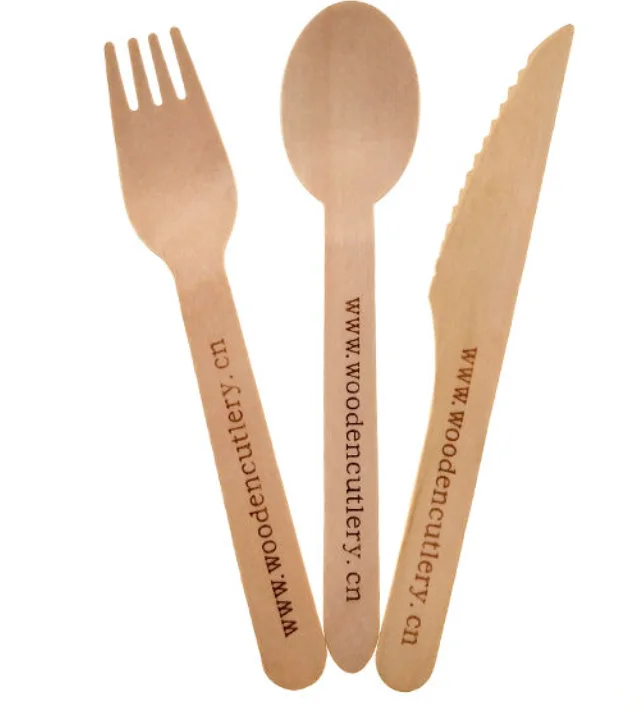
Frequently Asked Questions (FAQ)
Q1: Do bamboo and wooden utensils have an unpleasant taste or odor?
Premium bamboo and wooden cutlery undergo strict high-temperature drying and mechanical polishing without chemical coatings, ensuring they remain flavor-neutral. Bamboo’s smoother finish typically delivers a refined mouthfeel compared to standard wood.
Q2: How long do these utensils hold up in hot or liquid foods?
Unopened packages last over 2 years in cool, dry storage. During meals, bamboo stays strong in hot liquids or oily foods for hours without warping. Wooden utensils perform best when consumed within 30–60 minutes of serving.
Q3: How can restaurants leverage eco-cutlery for marketing?
You can print bio disposable cutlery labels on your packaging or include a short eco-friendly note. Highlighting your plastic-free commitment helps build brand trust and resonates strongly with modern, conscious consumers.
Whether you are looking for cost-efficient wooden packs for high-volume takeout or premium bamboo cutlery to elevate your brand’s dining experience, making the right choice pays off.
Looking for sample testing, custom packaging, or tailored supply solutions? Feel free to reach out to the Gorlando team—we are always here to help you find the best eco-friendly path forward!
发表回复