
 Русский
 Português
 Español
 Français
 Deutsch
 العربية
 简体中文
简体中文 日本語
日本語 한국어
한국어
Imagine This $50 Presentation Disaster…
Picture your top hospitality client firing up an open-flame grill in front of a packed dining room. As the chef flips a prime wagyu skewer, the bamboo stick snaps in half, splinters into the meat, and turns pitch-black from char.
Suddenly, a $50 gourmet dish looks like a $5 mistake—all because of a $0.02 skewer.
In high-end food service, bamboo skewers are no longer just utilitarian disposable sticks; they are an extension of the brand’s visual identity. As a procurement manager or distributor, offering the right skewer type directly impacts your clients’ presentation and your own reorder margins.
So, should you stock classic natural bamboo or upgrade to smoked carbonized bamboo? Let’s break down the truth behind performance, shelf-life, and profit potential.
What Exactly is Carbonized Bamboo? (Hint: It’s Not Painted!)
Many buyers mistake carbonized bamboo for chemically stained or dyed wood. In reality, modern high-temperature carbonization is a 100% natural thermal metamorphosis:
- High-Pressure Steaming: Raw Moso bamboo is placed into high-pressure steam chambers at 200°C – 300°C.
- Natural Sugar Caramelization: The intense heat breaks down the natural starches and sugars inside the fibers, naturally darkening the wood into rich golden-caramel or espresso brown tones.
- Pore Sealing & Thermal Stabilization: The process drives out residual moisture and collapses internal micro-pores, turning raw bamboo into a dense, moisture-resistant material.
The result? Smoked bamboo BBQ sticks that match open-flame aesthetics without leaching artificial chemicals into food.
Head-to-Head Comparison: Carbonized vs. Natural Bamboo Skewers
When supplying restaurant-grade wooden picks and commercial skewers, understanding how they perform under heat and high humidity is essential for inventory control and client satisfaction.
| Feature | Carbonized Bamboo Skewers | Natural Bamboo Skewers |
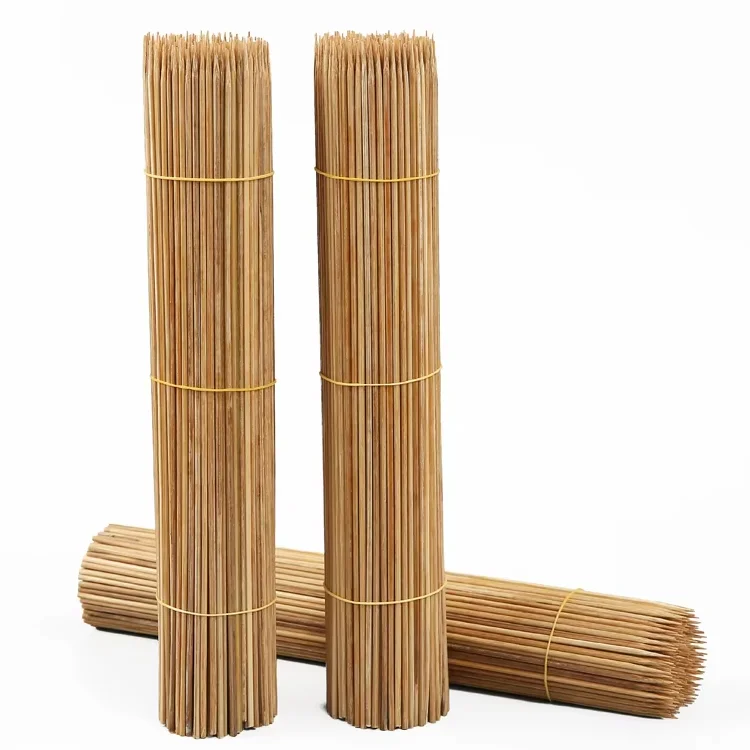
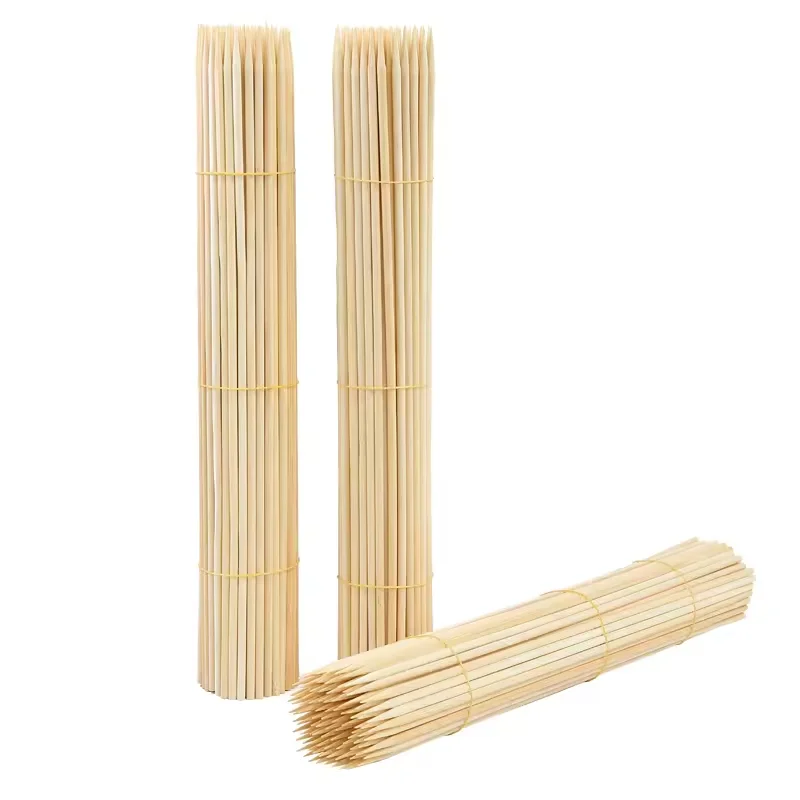
| Visual Aesthetic | Rich caramel/smoked brown; conceals burn marks | Bright ivory/light beige; clean and minimalist |
| Mold & Moisture Defense | Superior: Sealed pores resist humidity during transit | Standard: Prone to moisture absorption if unsealed |
| Splinter Control | Enhanced: Heat smooths out fiber fuzz | Good: Strong, but raw fibers can swell when wet |
| Heat Resistance | High: Pre-caramelized fibers resist charring on open fire | Moderate: Requires thorough soaking to avoid burning |
| Best B2B Target | Upscale yakitori lounges, luxury resorts, boutique caterers | Street food vendors, quick-service chains, retail packs |
| Margin Potential | Higher Premium: Drives elevated wholesale margins | Volume Play: Low margin per unit, high volume |
The Distributor’s Choice: Which Option Sells Better?
1. The Visual Upgrade for Premium Clients
If your buyers include boutique hotels, open-fire steakhouses, or artisanal BBQ brands, carbonized bamboo skewers are an easy upsell. The dark tone acts as a natural visual frame for meats and vegetables, elevating the perceived value of every dish served.
2. The Hidden Hero: Warehouse Shelf-Life
The nightmare for any eco-friendly wholesale skewers distributor is discovering ocean-transit container sweat or warehouse mold on stored stock.
Because carbonization eliminates the sugars that mold fungi feed on, heat-resistant carbonized skewers offer up to 40% higher resistance to warehouse mildew compared to untreated natural options. For international distributors handling bulk sea freight, this drastically reduces inventory risk and loss.
Frequently Asked Questions (B2B Buyer FAQ)
Q: Does the carbonization process make the bamboo brittle?
A: Not when using mature Moso bamboo (4–5 years old). While carbonization slightly reduces elasticity, it increases surface density. Carbonized skewers retain over 90% of their raw tensile strength—more than enough to hold heavy cuts of meat and dense vegetables without snapping.
Q: Are smoked bamboo skewers certified food-safe?
A: Absolutely. True carbonization relies exclusively on heat and water vapor—zero chemical dyes, bleaches, or varnishes. Ensure your supplier holds FDA, LFGB, or FSC certifications for total compliance.
Q: Do carbonized skewers alter the taste of food?
A: Not at all. The thermal process permanently seals the wood fibers. They are completely odorless and flavor-neutral, allowing the chef’s original seasoning to take center stage.
Final Verdict: Which Skewer Belongs in Your Catalog?
- Choose Natural Bamboo Skewers for high-volume, cost-sensitive food trucks, delivery packaging, and retail mass markets.
- Choose Carbonized Bamboo Skewers when supplying upscale dining, yakitori lounges, and open-flame grills where visual aesthetics and zero-mold warranty matter most.
📦 Ready to Elevate Your Skewer Inventory?
Don’t let cheap skewers hold back your clients’ presentation. Compare the quality yourself!
发表回复